
The best materials for printing QR codes depend on where the code will live, but paper works for short indoor use, laminated stock suits counters and menus, and vinyl, polyester, or metal last longest outdoors.
Material matters more than most people expect. A perfectly good code can fail early because the surface curls, fades, gets greasy, or picks up glare. If you choose the stock for the real setting, your code usually stays readable far longer than if you only think about print quality.
Which material fits your QR code's real job?#
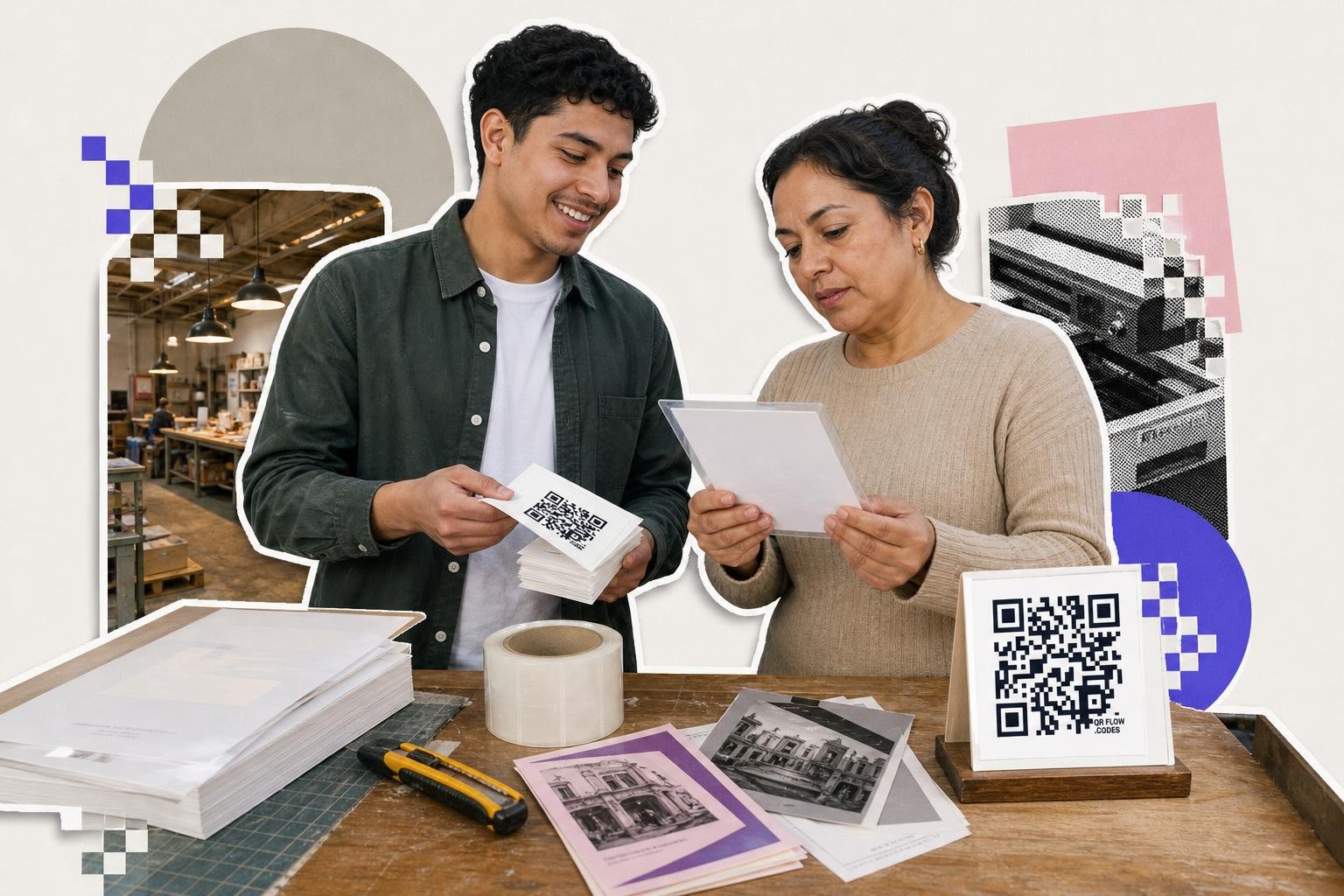
Paper is best for cheap, short-term indoor use. Laminated paper or cardstock is better for repeated handling. Plastic films and rigid signs are better when weather, splashes, or cleaning enter the picture.
A table tent in a cafe, a flyer in a lobby, and a box on a loading dock do not need the same material. Indoor vs outdoor QR codes are the first split to make.
For indoor use, these are the usual picks:
- Uncoated paper, cheapest, good for handouts, flyers, inserts
- Coated card stock, better for counter cards and business handouts
- Laminated card, better for menus, table cards, and wipe-clean surfaces
- Paper sticker, good for short campaigns on packaging or shelves
For outdoor or rougher use, look at these:
- Vinyl sticker, flexible and water resistant
- Polyester label, stronger than paper and common on products
- Acrylic sign, clean look for doors, walls, and reception areas
- Aluminum or stainless steel plate, best for long exposure and hard wear
Gloss is the catch. A glossy finish can reflect overhead lights and make scanning annoying, especially at a shallow angle. Matte usually gives you fewer headaches.
If your printed link might change later, make the code dynamic before you commit it to a durable material. Your first dynamic code is free in QRFLOW.codes, which is handy if the sign may outlive the campaign.
What lasts longest outdoors?#
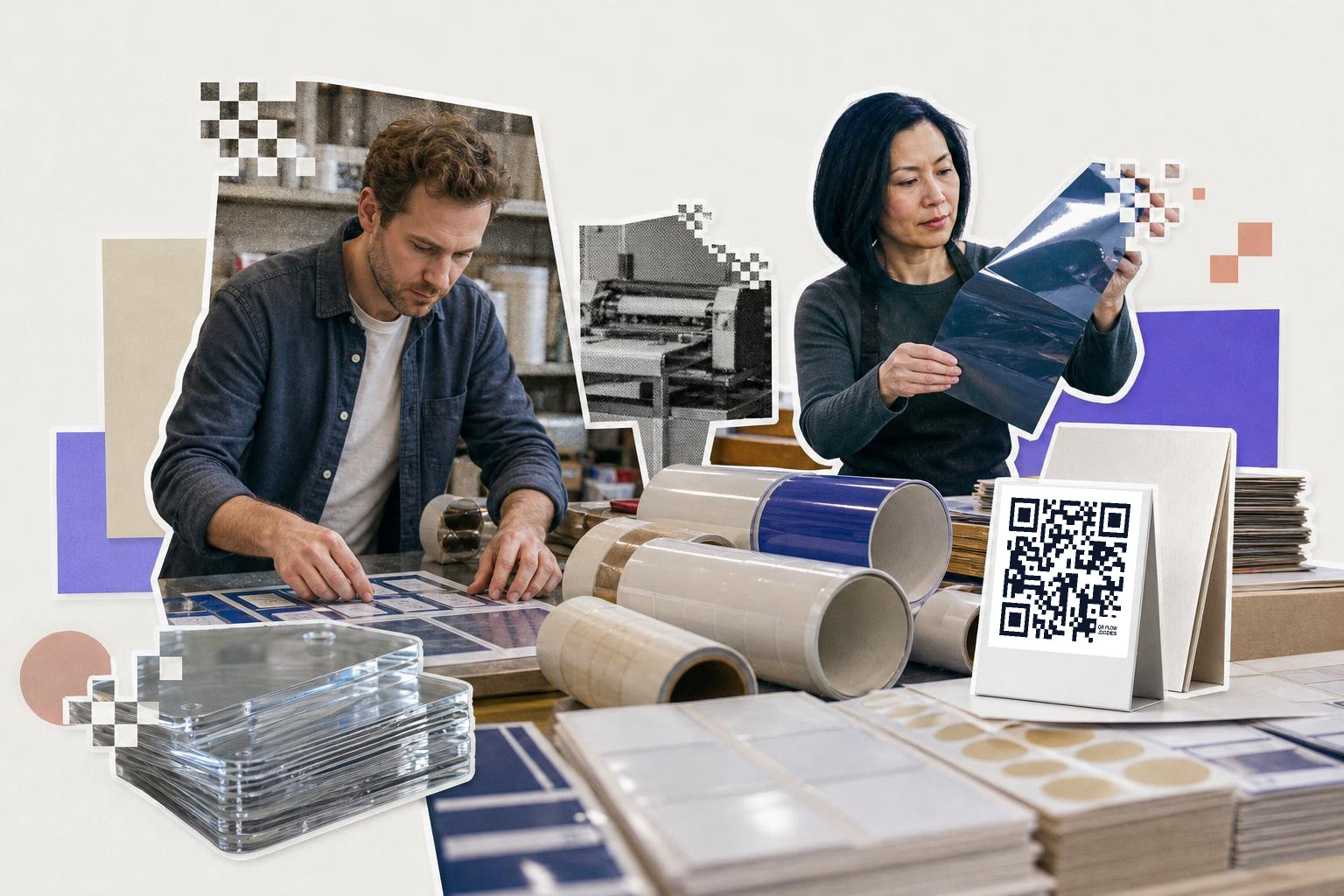
Outdoor QR code materials need three things: water resistance, UV resistance, and a print method that will not fade fast. Vinyl, polyester, powder-coated metal, and engraved metal are the usual safe choices.
Rain is only half the problem. The sun does real damage. A black code printed with weak inks can fade to dark gray, and once contrast drops too far, scan reliability drops with it.
For outdoor use, a simple ranking looks like this:
- Paper, poor, even if laminated at the edges
- Laminated card, fair for sheltered spots only
- Vinyl decal, good for windows, doors, temporary outdoor signs
- Polyester label, good for equipment, bins, and packaging that gets handled
- Acrylic sign with UV-stable print, good for mounted signs
- Engraved or baked metal plate, excellent for long-term exposure
UV-resistant printing matters most on anything meant to stay up for months, not days. If a code will face direct sun every afternoon, ask your printer about UV-stable inks, outdoor-rated laminate, or engraving instead of standard digital print.
Printed QR longevity also depends on what touches the surface. Cleaning sprays, hand oils, abrasion, and shipping scuffs can wear a code down long before weather does.
If you need the code to survive for years, metal is the safest answer. If you need six months on a shop window, vinyl is usually enough and costs much less.
What is the most cost-effective choice?#

Cost-effective QR materials are the ones that last for the full campaign, not the ones with the lowest unit price. Reprinting 500 cheap labels twice can cost more than printing 500 stronger ones once.
Here is the practical rule. Match the material life to the campaign life.
A weekend event can use paper signs or card stock. A three-month promo on takeaway packaging is often fine on paper labels if the package stays dry. A permanent entry sign should skip straight to acrylic, polyester, or metal.
Cheap to premium usually goes like this:
- Paper
- Card stock
- Laminated card
- Paper sticker
- Vinyl sticker
- Polyester label
- Acrylic sign
- Metal plate
That order shifts with size and quantity, but not by much. Small labels in large batches are often cheap in polyester. One-off rigid signs are where acrylic and metal jump in price.
A material upgrade is worth it when replacing the sign costs labor too. Think gate signs, outdoor tables, equipment tags, or anything mounted with screws or adhesive.
For large runs, how to generate QR code, and which type to pick helps you sort out the code itself before you order stock. If you are printing tiny labels, how small can a QR code be for effective scanning is the sizing check to do before production.
Best materials for printing QR codes by use case#
The best materials for printing QR codes change by setting. Flyers, menus, packaging, windows, and equipment tags each wear out in different ways.
Here is the shortest useful version.
For restaurant tables and menus, use laminated cards, synthetic paper, or acrylic. Those surfaces get wiped often, so plain paper dies fast.
For retail shelf talkers and countertop signs, use coated cardstock indoors and acrylic if the sign stays up long term. Matte lamination helps under bright store lights.
For product packaging, use paper labels if the product is dry and short-lived, polyester if it may get rubbed, chilled, or splashed. Packaging codes often need durability more than thickness.
For window decals, use outdoor vinyl with UV-resistant printing. Clear window stickers can work, but contrast matters more than style.
For warehouse bins, tools, or equipment, use polyester or metal. These codes get scratched, bumped, and cleaned.
For real estate boards and outdoor wayfinding, use rigid plastic, acrylic, aluminum composite, or metal. Those signs face sun and weather for weeks or months.
For event badges or table cards, card stock is usually enough unless they will be reused. If the schedule or destination may change after printing, a dynamic code saves a full reprint. That is the whole point of static vs dynamic QR code.
Eco-friendly options exist too, but keep the use case honest. Recycled paper and card stock are great indoors. Compostable or paper-first labels are fine for short runs. For long outdoor use, replacing a failed sign three times is not especially green.
Should you laminate, coat, or engrave?#
Lamination helps against spills and rubbing, but it does not turn indoor paper into a forever sign. Coatings help with smudges and glare, while engraving is the heavy-duty option for hard wear and long life.
Choose the finish based on the failure you are preventing.
Lamination is good when hands, food, or cleaning sprays are the problem. Think menus, check-in cards, and reception signs. Matte lamination is usually better than gloss for scan comfort.
A weatherproof coating helps when you want a cleaner surface without moving to a thicker sign. This is common for branded cards and shelf displays.
Engraving or etched metal makes sense when fading is unacceptable. It costs more up front, but it is the strongest answer for memorial plates, machinery tags, and exposed site signs.
If you are adding brand colors, keep the dark parts dark. Material can help durability, but it cannot fix a low-contrast design. If you want to style the code, free QR code generator lets you test color choices before you print.
A good printed code is just a square that still works after real life gets to it. Pick the material for the mess, the sun, and the lifespan, not the mockup.
Impact of environmental factors#
Environmental factors can significantly affect the longevity and readability of QR codes. Humidity, temperature fluctuations, and exposure to chemicals are critical considerations. In humid conditions, paper-based materials may warp or degrade, making them unsuitable for long-term use. Instead, opt for materials like polyester or vinyl, which resist moisture better. In areas with extreme temperature changes, materials that expand and contract without damage, such as certain plastics or metals, are preferable. Chemical exposure, such as in industrial settings, requires materials that can withstand potential spills or splashes. Polyester labels and metal plates are often resistant to many chemicals, making them ideal for such environments.
Choosing the right adhesive#
The adhesive used for QR code stickers or labels is just as important as the material itself. A strong adhesive ensures that the QR code remains in place and readable. For temporary applications, a removable adhesive might be suitable, allowing for easy repositioning or removal without leaving residue. For long-term or outdoor use, a permanent adhesive is necessary to withstand weather conditions and prevent peeling.
Consider the surface to which the QR code will be applied. Smooth surfaces like glass or metal require different adhesives than porous surfaces like cardboard or fabric. Testing the adhesive on a small area first can help ensure it meets the requirements of the specific application.
Printing technology considerations#
The technology used to print QR codes can influence their clarity and durability. Inkjet printing is common for short-term, indoor use due to its cost-effectiveness. However, it may not be suitable for outdoor applications, as the ink can fade or run when exposed to moisture. Laser printing offers better durability and is often used for more permanent indoor applications.
For outdoor or industrial use, consider thermal transfer printing, which uses heat to transfer ink onto materials like polyester or vinyl, creating a more durable print. Engraving is another option for metal plates, providing a permanent solution that withstands harsh conditions. Choosing the right printing technology ensures that the QR code remains scannable throughout its intended lifespan.
Questions people ask about best materials for printing QR codes#
Can QR codes be printed on fabric?#
Yes, QR codes can be printed on fabric using textile printing methods. This is common for promotional items like t-shirts and tote bags. Make sure the fabric is smooth and the print quality is high to ensure the QR code remains scannable.
What is the best material for QR codes on business cards?#
For business cards, coated cardstock is a good choice. It offers a professional look and durability. If you want extra protection against wear and tear, consider laminated cardstock, which resists smudges and minor spills.
How do I make QR codes last longer outdoors?#
To make QR codes last longer outdoors, use materials like vinyl, polyester, or metal. Ensure the print is UV-resistant to prevent fading. Engraving on metal is ideal for long-term durability, while vinyl and polyester offer good water resistance.
Are there eco-friendly materials for printing QR codes?#
Yes, eco-friendly options include recycled paper and card stock for indoor use. Compostable or paper-first labels work for short-term applications. However, for long-term outdoor use, traditional materials may be more durable and sustainable in the long run.
When you are ready to make the code itself, start with QRFLOW.codes. If you need every code to stay editable after printing, the plan details are on /pricing.
When the sign, card or label is ready to print, make the code on the generator and download it as SVG or PNG at the size the piece needs.