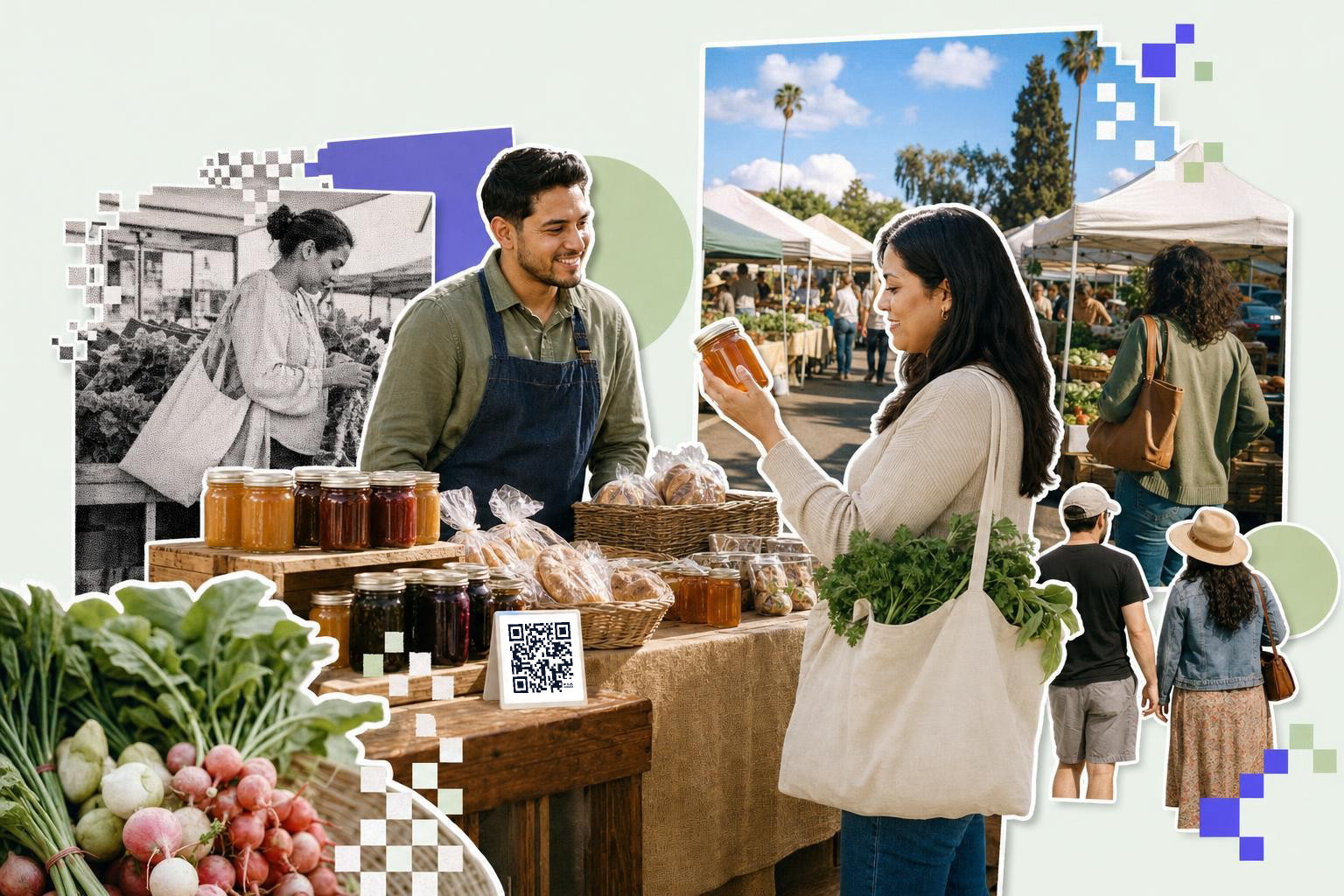
You do not need a barcode to sell at a farmers market, and most stallholders never get one. You need a barcode the day you want a shop to stock you, and the number behind it now costs $30 once and takes about ten minutes.
Nobody at a farmers market scans anything. You take cash or you tap a card reader, you hand over the jar, and that is the sale. A barcode solves a problem you do not have yet.
The question is really about the market after this one. Most small food and craft brands get asked for a barcode by the first shop that wants to stock them, and that request usually arrives with a deadline attached.
Do I need a barcode to sell at a farmers market today?#
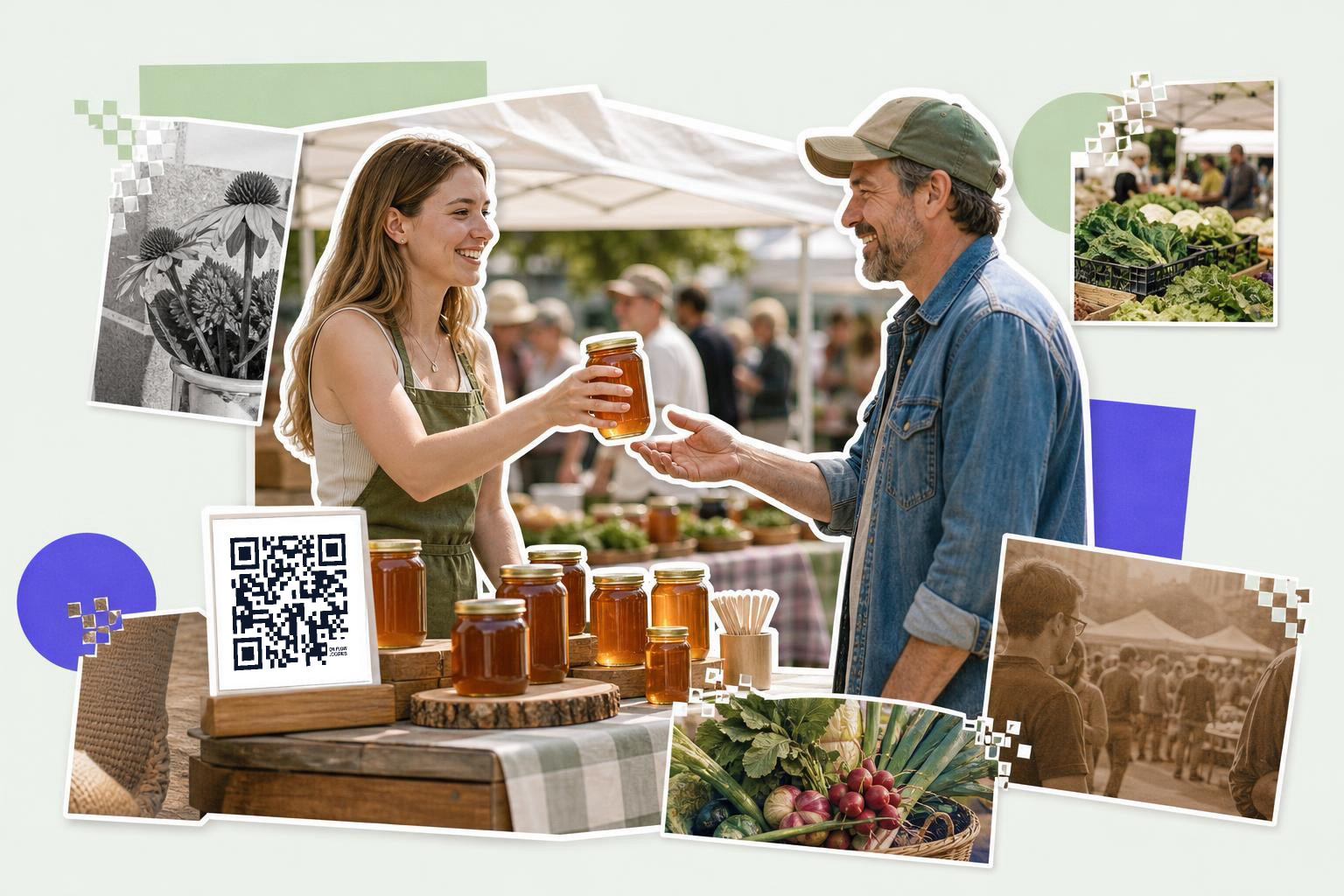
No. A barcode exists so a till can look up a price without somebody typing it. At a stall you are the till.
You also do not need one for a craft fair, a pop-up, a church hall, or your own website. If you sell on Amazon you will be asked for one, and marketplaces are stricter about it than small shops are.
So the honest answer for a stall is: skip it, and spend the money on better labels.
When does the answer change?#
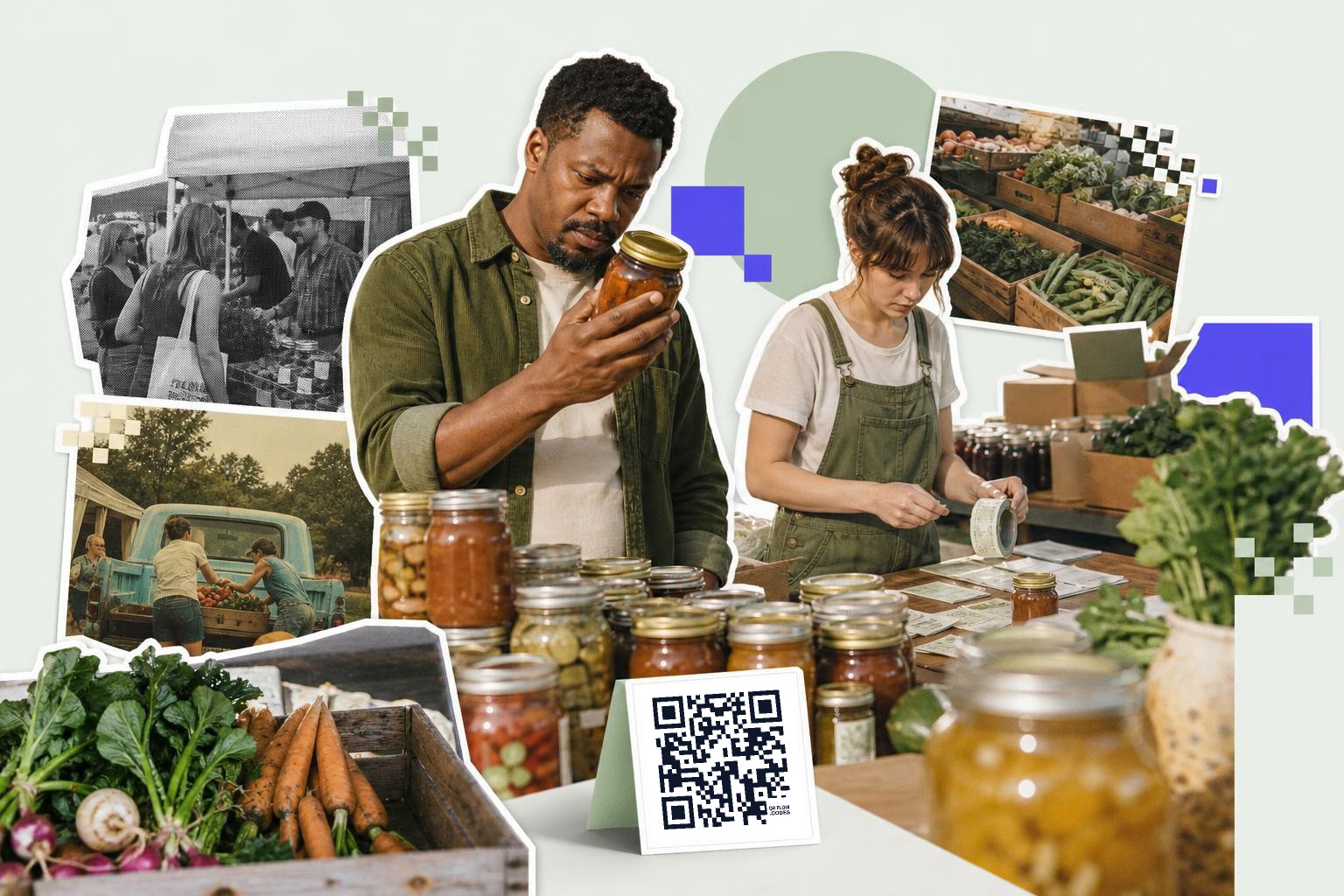
It changes the first time somebody behind a counter asks "do you have a UPC?"
That tends to happen at one of these moments:
- A local grocer or deli offers to carry a few cases.
- A gift shop wants to put you on a shelf rather than a table.
- A distributor gets in touch.
- You list on Amazon, Walmart Marketplace or a similar platform.
None of those gives you much notice. That is the argument for sorting it out before you need it, not the week a buyer is waiting.
What is a barcode number, really?#
The lines are just a picture. The thing a shop cares about is the number underneath, called a GTIN, and in the United States you will usually meet it as a 12 digit UPC.
That number is licensed to you by GS1, the organization that issues them. When a retailer scans your jar, their system checks who owns that number. If it comes back as somebody else, your product can be refused.
| What you are buying | What it costs | Renews? |
|---|---|---|
| One number, for one product | $30 | No |
| Up to 10 products | $250 to start | $50 a year |
| Up to 100 products | $750 to start | $150 a year |
One product means one version a shopper can buy separately. Two jar sizes of the same honey is two numbers, not one.
Why are barcodes so cheap on some websites?#
Search for a barcode and you will find sites selling them for a few dollars. Those numbers were licensed to a company years ago and resold when it closed or split up its range.
They scan. That is the problem, because they scan and look fine right up until a buyer checks the register and finds your sauce is registered to a defunct electronics importer. Major retailers do check.
If you are only ever selling at markets, none of this matters. If a shop is in your future, buy the number from GS1 and keep the receipt.
What changes by 2027?#
There is a second thing worth knowing, because it will reach small brands eventually.
Retailers have agreed to be able to scan QR codes at checkout by the end of 2027, an industry milestone called Sunrise 2027. Our guide to GS1 Digital Link on product packaging covers what that means for a label. The new code carries the same product number inside a web address, so one square both rings up at the till and opens a page on your phone.
For a stallholder that is not urgent. For a brand planning its first proper print run, it is worth knowing before you pay a designer, because the new code sits next to the old one and needs room on the label.
What to do now, in order#
- Selling only at markets? Do nothing. Come back when a shop asks.
- Expecting a shop this year? Buy one GTIN for each product version from GS1.
- Designing packaging? Leave space beside the barcode for a QR code, even if you do not add one yet.
- Ready for the next step? Read how many GTINs you actually need before you pay, because the count surprises people.
Questions people ask#
Can I just print my own barcode?#
You can print the lines yourself. You cannot invent the number. Any barcode generator will happily encode a number you made up, and it will scan to a product that is not yours.
Does a QR code on my jar count as a barcode?#
Not for a till, unless it is built to the GS1 standard with your product number inside it. An ordinary QR code that opens your website is a marketing link, and a checkout cannot read it.
How long does it take to get a number?#
Minutes. You fill in a form on the GS1 US site, pay, and the number is issued straight away.
I already have a barcode from a previous business. Can I reuse it?#
Only for the product it was licensed for. One number identifies one product, and reusing it for something else creates exactly the mismatch retailers look for.
Ready when the shop asks? Make a GS1 code for your product once you have the number, or make a plain QR code free for the stall sign in the meantime.