
A QR code for headstones works best when it links to one simple memorial page, is printed at least 1 inch (2.5 cm) wide on outdoor-safe material, and is tested in bright sun before it is fixed in place.
A small code can hold a lot. One scan can open photos, a short life story, a voice note, or a video message from family.
That sounds lovely, but outdoor memorials are less forgiving than a flyer or business card. Rain, glare, stone texture, and weak cell service all matter. If you're making a memorial QR code for a family member, or offering one as part of a memorial service, the job is simple: make it easy to scan years from now.
What should a QR code for headstones link to?#
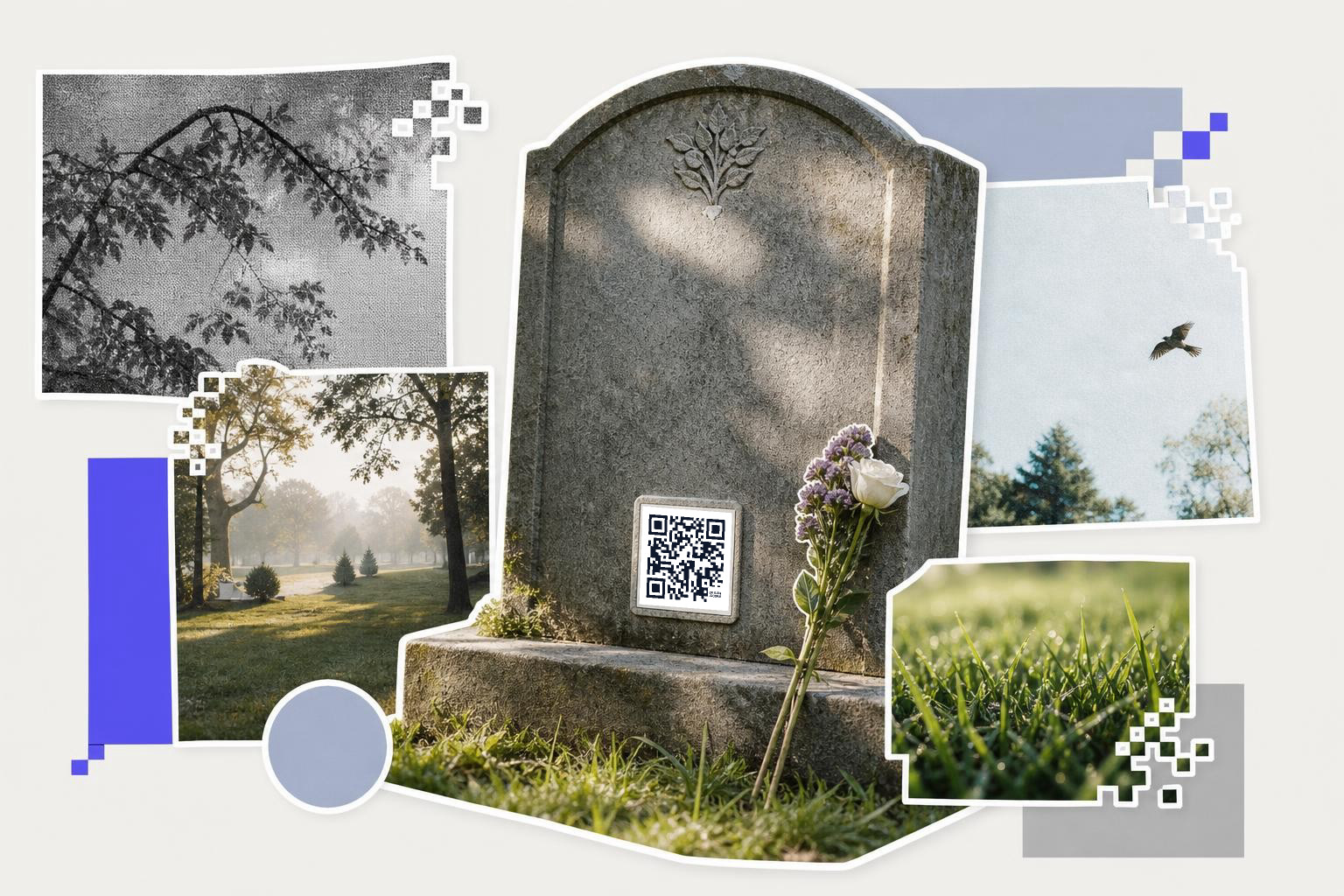
A QR code for headstones should link to one page that loads fast and feels complete on a phone. A short memorial page with a name, dates, 5 to 20 photos, and one written story is a solid starting point.
Most people do not want to scan a grave marker and land on a messy folder, a social profile, or a page full of ads. A clean memorial page is better. It gives visitors one place to start, and it is easier for family to manage later.
Good options include a memorial website, a private family page, a photo gallery, or a short video page. If you want multimedia, keep it light. A two minute video and a few compressed photos will load more reliably than a giant gallery with auto-play music.
A headstone QR link can also point to one page that branches out. For example, the page can show a short written tribute first, then buttons for photos, video, family tree, service details, or a donation page. That keeps the first screen calm.
If the page address might change later, use a dynamic QR code. That lets you edit the destination after the plaque is installed. On QRFLOW.codes, your first dynamic code is free and making every code dynamic is a paid feature, which is worth it here because replacing a memorial plaque is harder than reprinting a flyer. If you want the plain version of that choice, see static vs dynamic QR code.
What material should a memorial QR code use outdoors?#
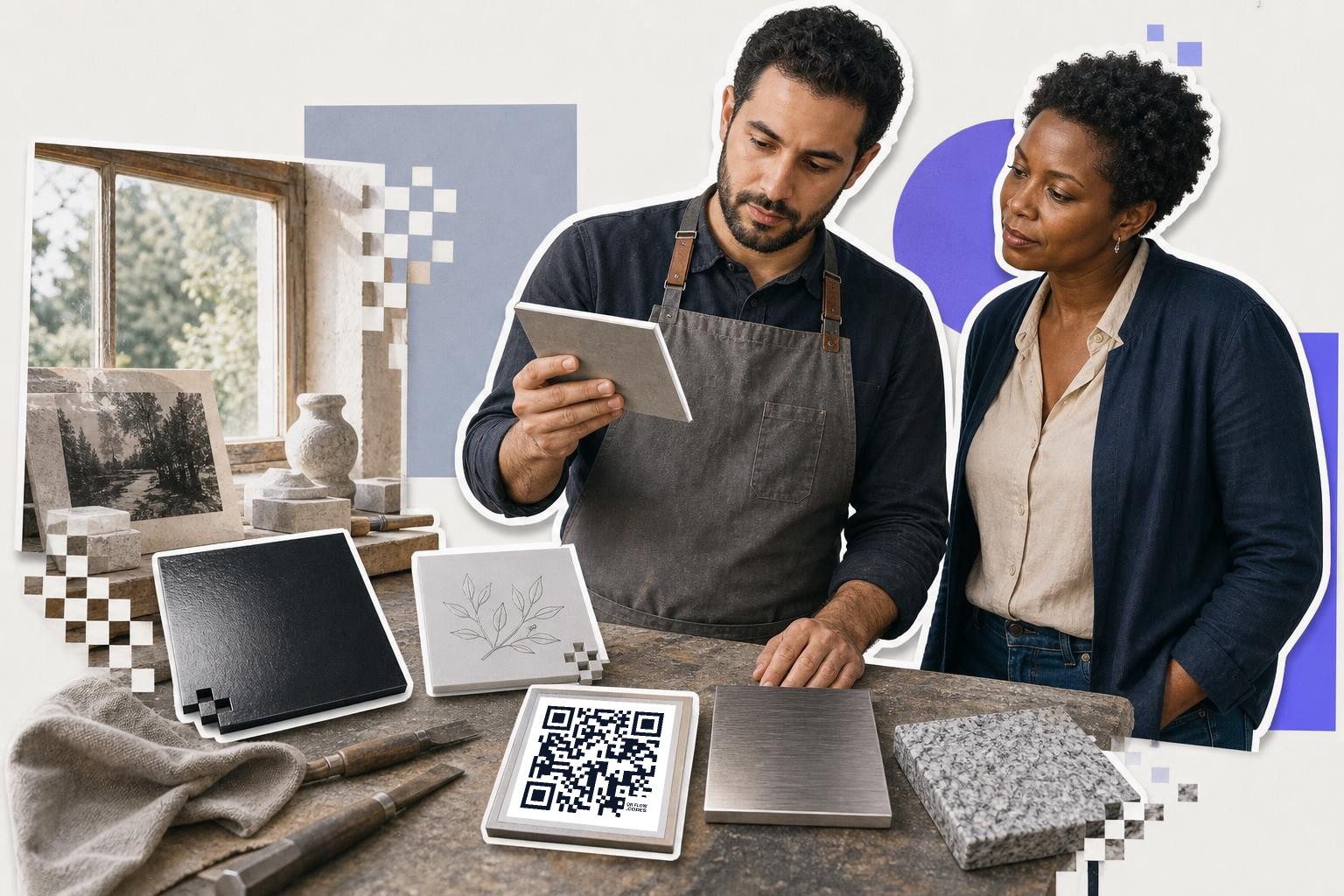
A memorial QR code should be etched, engraved, or printed on outdoor-safe material, not regular paper or a home sticker. Stainless steel, anodized aluminum, ceramic, and engraved stone inserts are common picks.
Outdoor life is the whole game here. Sun fades ink. Water lifts cheap adhesive. Rough stone can distort tiny squares if the surface is uneven.
For many families, the simplest route is a small metal plaque attached to the base, bench, or nearby marker. A smooth plate usually scans more reliably than trying to carve the code straight into rough granite. Ceramic can work too, as long as the glaze does not create heavy glare.
Keep the design plain. Black on a light background is safest. Fancy colors, low contrast, and decorative patterns are not helping anyone at a cemetery in midday sun.
Ask the monument company or cemetery what they allow before ordering anything. Some locations allow only certain plaque sizes, adhesives, or placements. A memorial service provider should check those rules first, not after the family has approved the design.
Need to make and test a code before you hand files to an engraver? The free QR code generator is enough for that first pass.
How big should a QR code for graves be?#
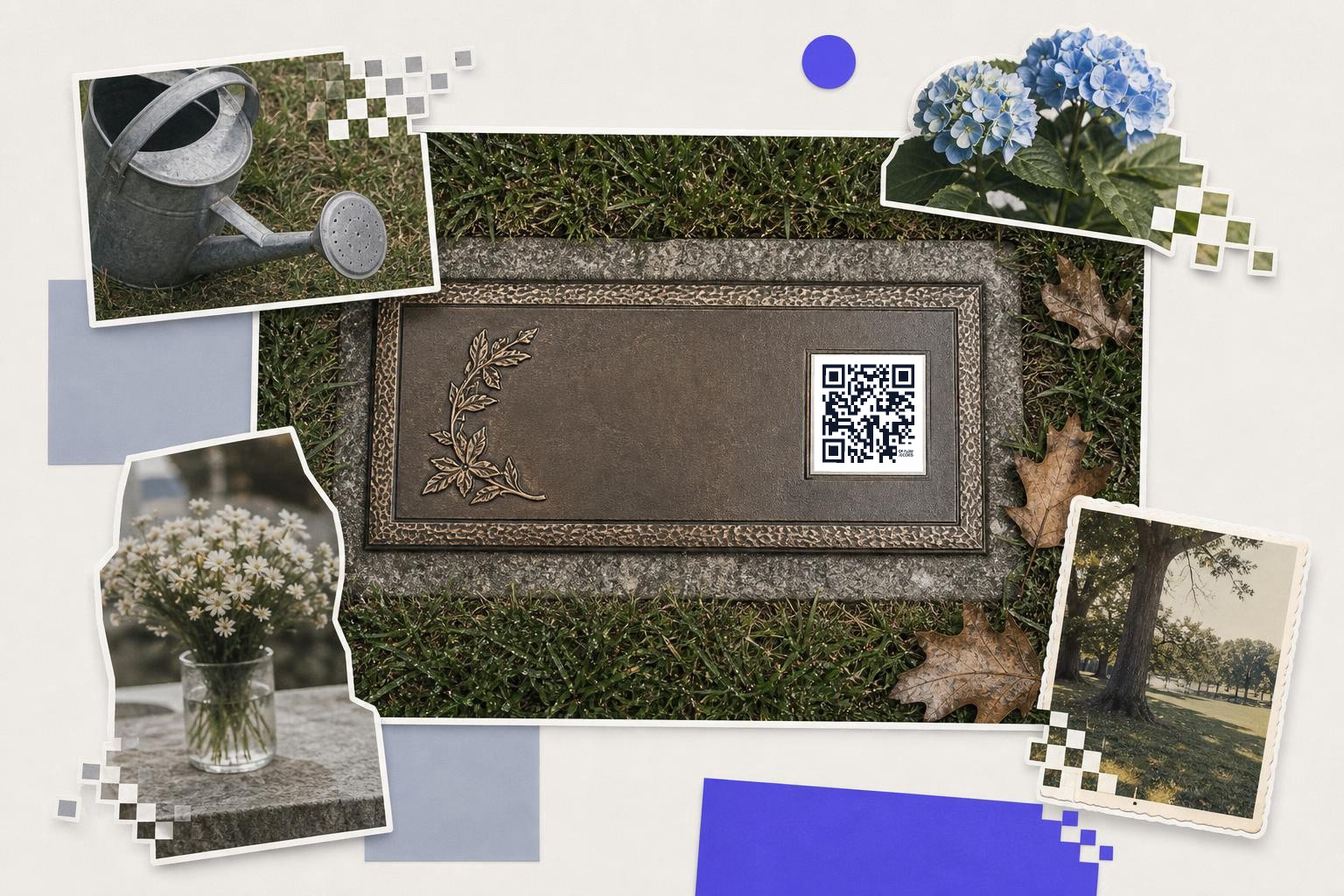
A QR code for graves should usually be at least 1 inch (2.5 cm) wide, and 1.2 to 1.5 inches (3 to 4 cm) is safer outdoors. If the marker sits low, or visitors will scan while standing, go bigger.
Tiny memorial plaques look neat on screen and frustrating in real life. Outdoor scanning adds glare, shadows, and handshake, so a little extra size helps.
For a small bronze or steel tag, 1.2 inches (3 cm) square is a practical minimum if the link is short and the code is not crowded. For older visitors, or for markers people scan from a slight distance, 1.5 inches (4 cm) to 2 inches (5 cm) is more forgiving.
Leave a quiet margin around the code. That blank border matters. Do not let decorative borders, names, or etched leaves press right up against the edges.
Placement matters too. Put the code where a person can get their phone 8 to 18 inches (20 to 46 cm) away without twisting awkwardly. The top of a sloped base or the face of a smooth side plaque is often easier than a low flat surface.
If you want a fuller size guide before production, how big should a QR code be when printed? covers the basics in plain terms.
Where should the code go on the marker?#

A headstone QR link should go on a smooth, easy-to-reach spot that gets the least glare and is not blocked by grass, flowers, or decorations. The lower front base, side plaque, or bench face are common spots.
People need room to stand, aim a phone, and scan without kneeling into wet grass. A code placed too low can become a hassle, especially after rain or snow.
The best spot depends on the stone shape. Upright markers often have space on the base. Flat markers may need a raised plaque or nearby memorial bench. If flowers, flags, or solar lights often sit in front of the marker, avoid that zone.
Sun angle is easy to miss. A polished surface can turn into a mirror at certain hours. Test the actual placement in morning and afternoon light before anything is fixed.
A code that points to a QR code for a video or gallery still needs the same physical care. The destination can be rich. The plaque should stay simple.
What should you test before the plaque is installed?#

A memorial QR code should be tested on at least two phones, outdoors, from normal standing distance, before final installation. Test the real material sample if you can, not just a paper print.
This step saves the painful version of the project, where the code looks beautiful and nobody can open it. Cemetery lighting is harsher than kitchen lighting.
Run through a short checklist:
- Scan on iPhone and Android.
- Test in bright sun and open shade.
- Check from 8 inches (20 cm) and 18 inches (46 cm) away.
- Make sure the page loads on mobile data, not just home Wi-Fi.
- Confirm the link opens without a login.
- Ask one person over 60 to try it if they are part of the expected visitors.
If the first version feels fussy, do not blame the phone right away. A larger code, darker contrast, or a shorter destination usually fixes it. If your page changes later, a dynamic code means you can edit the link instead of replacing the plaque. QRFLOW.codes also lets you download PNG and SVG files, which helps when a fabricator asks for a clean vector file.
If a test code refuses to scan, my QR code will not scan is a good troubleshooting page to keep handy.
What can the memorial page include besides text?#
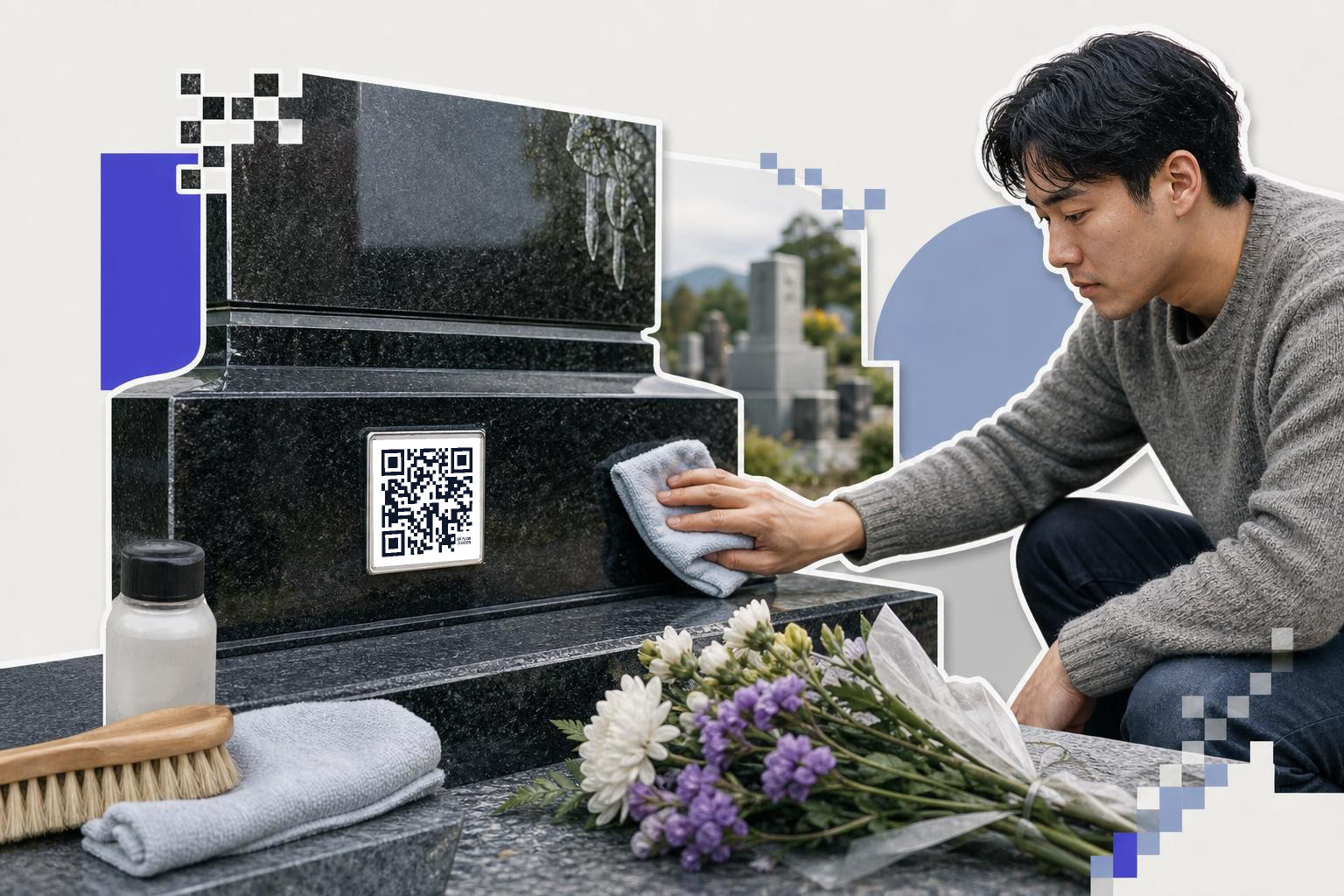
A memorial page can include photos, short videos, audio clips, maps, service details, and family messages, but it should open with the essentials first. Name, dates, and one clear photo belong at the top.
This is where the idea becomes personal. A QR code for graves can hold more than a name and two dates, and that is the whole point.
Good additions include a voice recording, a timeline of key moments, a few labeled family photos, or a short written story in the person's own style. If the page includes a map to a gathering or reception, remove it later if it is no longer useful.
Video works well when it is short and direct. A one minute clip from a birthday, wedding toast, or home movie often says more than a long montage. For photos, fewer is better if the audience is standing outside. Ten meaningful images beat 150 tiny ones.
If you want to gather memories from relatives after the funeral, a Google Form QR code size guide can help with a separate card at the service. That is usually better than sending headstone visitors to a form.
Privacy matters here too. Some families want a public page. Others want a private page shared only with relatives. Pick that before the plaque is made, because it shapes the whole setup.
How do you keep a memorial QR code working for years?#
A memorial QR code stays useful when the linked page is maintained, the domain stays active, and someone in the family knows where the files and login live. The physical plaque and the online page need a simple handoff plan.
Write down who manages the memorial page. Save the original image files, page login, and final destination URL in one shared folder. If the person who set it up moves away or changes email addresses, the page should still be recoverable.
Check the code once or twice a year. Wipe off dirt, leaves, or pollen with a soft cloth. If the page includes a fundraiser, event notice, or temporary service info, remove it when the time has passed.
For memorial businesses, this is where dynamic codes earn their keep. You can fix a broken link or move the page to a new domain without asking a family to replace metalwork. If that matters for your setup, the details are on the plans and prices page.
Families usually do best with one calm page, one durable plaque, and one person clearly in charge. That is enough.
If you're ready to make a memorial QR code and test the size before production, start with QRFLOW.codes.