
QR code size on apparel should usually start at 1.2 inches (3 cm) on a flat chest print, jump to 2 inches (5 cm) or more on hoodies and back prints, and stay off seams, folds, and stretch zones.
Clothing is harder than paper. The surface bends, wrinkles, moves, and sits at odd angles while someone tries to scan it from 2 to 4 feet (0.6 to 1.2 m) away. That means the smallest code that works on a flyer often fails on a shirt.
What QR code size on apparel works in real life?#
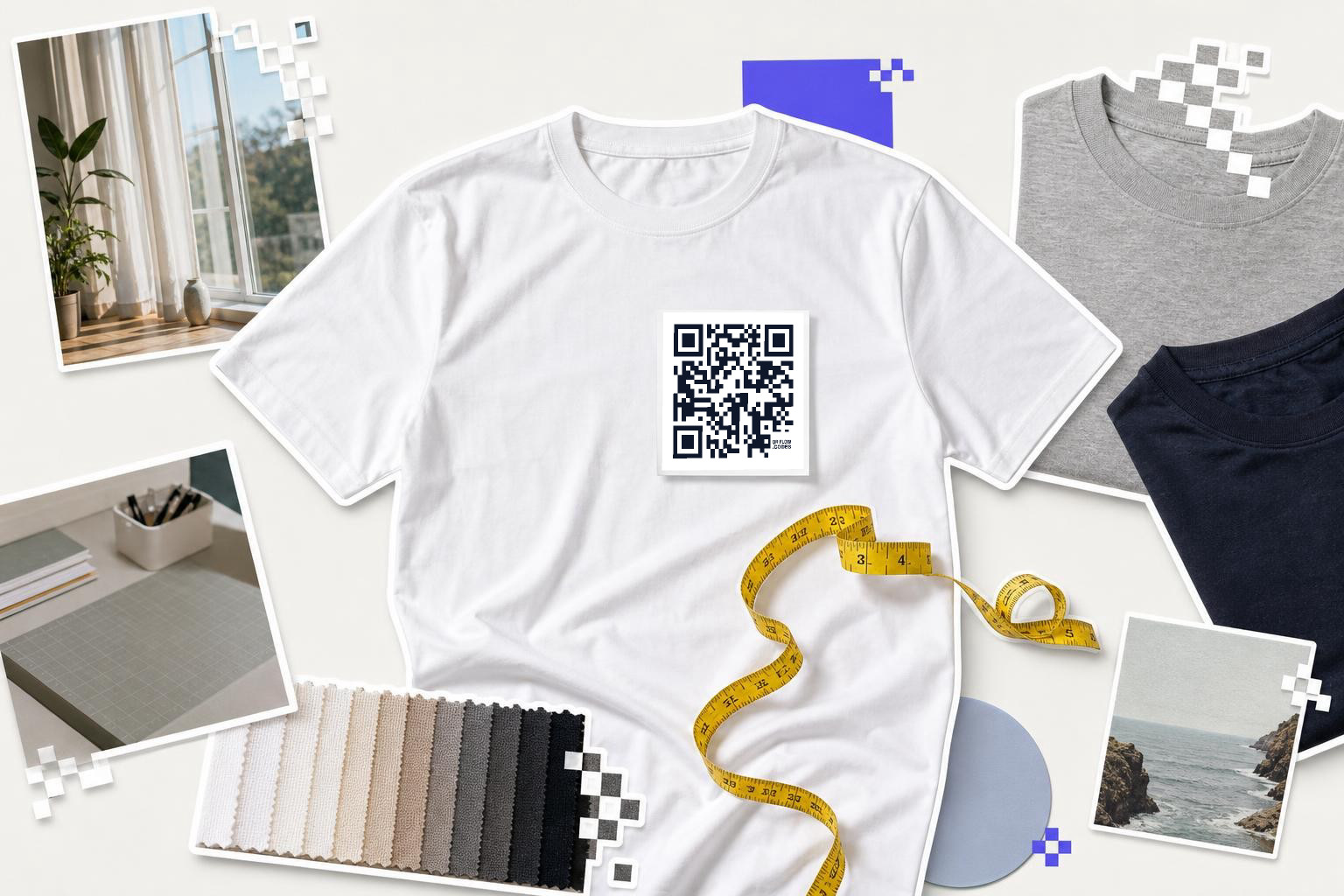
QR code size on apparel works best when you size for distance, not just design. For most shirts and tote bags, 1.2 inches (3 cm) is a practical minimum. If the code sits on a hoodie, jacket, or loose back print, 2 inches (5 cm) is safer.
Here is the short version by garment area:
- Left chest or small front print, 1.2 to 1.5 inches (3 to 4 cm)
- Full front print, 1.5 to 2 inches (4 to 5 cm)
- Back print, 2 to 2.5 inches (5 to 6.4 cm)
- Sleeve, 1.5 inches (4 cm) minimum, only if the sleeve stays flat
- Tote bag, 1.5 to 2 inches (4 to 5 cm)
Smaller can work in perfect conditions. Apparel almost never gives you perfect conditions. Fabric texture, body curves, and motion all steal readability.
A simple rule helps here. If the code is meant to be scanned while worn, go one size bigger than you would on paper. If it is meant to be scanned off-body, like on folded merch packaging or a flat tote, you can be a bit more aggressive.
If the landing page might change after the drop ships, make the code dynamic so you can swap the destination later without reprinting. Your first dynamic code is free, which is handy for seasonal campaigns or product pages that move.
Where should a QR code go on clothing?#
Clothing placement matters as much as size. The safest spots are flat areas that stay visible for a full second while someone aims a phone. On apparel, that usually means the center back, lower front, or a tote panel.
Good placements for scanability:
- Upper back, below the shoulder blades, not across the shoulder curve
- Full front, centered below the chest graphic
- Hem area on a boxy tee, if the code stays flat when worn
- Tote bag front panel
- Hang tags, if the code is for after-purchase content
Risky placements:
- Over seams
- On ribbed cuffs
- On stretchy side panels
- Across pockets or zippers
- High on the chest where fabric curves outward
- On sleeves that twist when the arm turns
Back prints usually give you the best mix of brand impact and scan room. A person standing in line or walking ahead gives other people time to scan. Chest prints look cleaner, but they are closer to the body's curve and often wrinkle when the wearer moves.
If the code is mainly for product info or care instructions, a hang tag may beat the garment itself. If the code is part of the artwork, put it on the garment and print a short web address under it, so somebody whose camera will not focus still gets where they were going.
A related guide on how big should a QR code be when printed is useful if you want a more general size rule before you adapt it to fabric.
What makes apparel QR codes fail?#
Apparel QR codes usually fail because the fabric changes the shape people think they printed. A code that looked crisp on a mockup can warp on a ribbed knit, sink into fleece, or break across a seam.
The biggest failure points are:
- Stretch. The squares turn into rectangles when the shirt pulls.
- Texture. Heavy weave and fleece soften edges.
- Low contrast. Fashion colors can look great and scan badly.
- Tiny quiet zone. The blank border around the code gets eaten by graphics.
- Oversized logos in the middle.
Keep the code dark on a light patch if you can. If the garment is black or patterned, place the code inside a solid light block. A transparent background can work, but only if the fabric behind it stays plain enough. We covered that in QR code with transparent background, and no white box.
Leave a quiet zone of at least 0.16 inches (4 mm) around the code on all sides. On textured garments, a little more is wise. If you want the code to carry brand colors, keep strong contrast and test the real ink on the real fabric, not just the digital file. Our guide to a custom QR code generator goes deeper on styling without breaking the scan.
How should fashion brands test before a full run?#
Fashion brands should test on the actual garment, at the actual print size, before approving production. One sample on a desk is not enough. Put it on a person, step back 3 to 6 feet (1 to 2 m), and try three different phones.
That test should answer four questions fast:
- Does it scan while worn, not just laid flat?
- Does the camera catch it in indoor store lighting?
- Does the code still work after a wash test?
- Is the landing page worth the effort of scanning?
The last question matters more than people think. A shirt code that opens a generic homepage is weak. A shirt code that opens a drop page, care guide, artist story, warranty form, or limited offer, give people a reason to scan.
If you are printing a collection with different destinations, bulk creation helps keep the files straight. If you need that later, the paid plans add bulk generation and deeper scan analytics on the paid plans. You can also start with a plain QR code for a link if the job is just one destination.
For teams approving artwork in batches, keeping the codes in one account makes retesting quicker when a campaign link changes, which saving and managing your codes covers.
What about hats, bags and scarves?#
A tote bag is the easiest surface in this whole article and a scarf is the hardest, which is worth knowing before you promise a code on both.
- Tote and backpack front panel. Flat, vertical, and it holds still while someone aims. Treat it like paper: 1.5 to 2 inches (4 to 5 cm) reads from across a room.
- Caps. The front panel is the only near-flat spot and it still curves. Go 1.5 inches (4 cm) rather than 1.2, keep it off the seam between panels, and test it on a head, not on a table. A flat cap scans and a worn one often does not.
- Beanies and anything ribbed. The rib opens and closes as it stretches, which turns the squares into rectangles. Put the code on a sewn label instead of the knit.
- Scarves. The fabric never stops moving and it is rarely flat for a full second. A woven label at the hem works; a print across the body does not.
The pattern underneath all four is the same one from the garment sizes above. Flat and still beats large, and a code on a stitched label beats a bigger code on a surface that moves.
One setup that works for most apparel campaigns#
A simple apparel setup is a 2 inch (5 cm) code on the upper back of a tee or hoodie, printed in black on a solid light patch, linked to one mobile page built for that garment or campaign.
That setup works because it solves the three usual problems at once. The code is big enough for casual scanning, the placement stays visible longer than a chest print, and the landing page can match the exact piece someone is wearing.
For brand impact, keep the code part of the design, not an afterthought stuck in a corner. But let the code do one job. “Scan for the story,” “scan to shop the drop,” or “scan for care and restock” is clearer than sending people to a menu of ten links.
Questions people ask about QR code size on apparel#
Can QR codes on clothing be smaller than 1.2 inches?#
QR codes on clothing can be smaller than 1.2 inches, but they may not scan reliably. Apparel conditions like fabric texture, movement, and distance can make smaller codes difficult to read.
Should you put a QR code on clothing seams?#
Placing a QR code over a seam can distort the code, making it unreadable. Seams can cause the code to break or warp, preventing scanners from recognizing it. It's best to place QR codes on flat, uninterrupted areas of the garment.
How can I ensure my QR code scans well on textured fabrics?#
To ensure a QR code scans well on textured fabrics, use a high-contrast design with a clear quiet zone around the code. Testing the print on the actual fabric is key. Place the code on a solid light patch if the garment is dark or patterned.
Is it better to use dynamic QR codes on apparel?#
Using dynamic QR codes on apparel is often better because they allow you to change the destination without reprinting. This flexibility is useful for seasonal campaigns or when the linked content might change over time, providing more value to the user.
Clothing moves, so your code has to be more forgiving than one on paper. Start bigger, place it flatter, and test it on a real body before the print run. Then, make your next one in free QR code generator and put the square where people can actually scan it.