A QR code for pictures holds a link, not the photos themselves, so the only real decision is which album or folder that link opens.
Most guides skip straight to making the code. That part takes a minute. The part people get stuck on is getting a few hundred photos somewhere a guest can open with one tap, with no app to download and no account to make.
So here are the places that work, what each one asks of the people scanning, and which ones let those people add their own pictures.
Where do your pictures need to live?#
Your photos need a web address before any code can point at them. Every option below hands you a share link you can paste into a generator, and all of them are free to set up.
A shared album in Google Photos#
Google Photos is the usual pick, because an album can be opened by people who do not use the app. Select your photos, choose Share, then Create link, and anyone holding that link can look. Give someone access to the album itself and they can add their own shots too.
One catch worth knowing: if you edit a photo after sharing the link, viewers may briefly still see the old version.
A shared album on an iPhone#
Every iPhone already has this in the Photos app. Open your shared album, tap the album name, and turn on Public Website. Apple then publishes the album as a web page anyone can open in a browser, and a Copy button hands you the link.
Skip that toggle and the album only opens for people you invited by Apple Account, which is not what you want on a printed card.
A folder in Google Drive#
Google Drive suits handing over originals. Drop the photos in one folder, set sharing to anyone with the link, and the code opens a file list people can download from. A folder looks plainer than an album, which matters less than you would think when someone only wants the full-size files.
A folder in Dropbox or OneDrive#
Dropbox and OneDrive earn their place when the photos already live there. Both give you a folder link that opens in a browser, so the code behaves the same way. Getting other people to add photos into those folders takes more setup, so treat them as sharing out rather than collecting in.
One single picture#
One picture needs no album at all. Any image already on a web page has its own address you can copy, and a code pointed at it opens that picture full screen. Good for a product shot, a poster, or a photo of today's menu.
A page of your own#
A page on your own site gives you the most control, which is why photographers use one for client galleries. You set the order, the captions, and whether people can download. A page is more work than an album, so save it for photos you are selling.
Which option should you pick?#
Pick a shared album in Google Photos if guests will add their own photos, and a Drive or Dropbox folder if you are handing over full-size originals. Everything else is a special case.
| Where the photos live | Best for | Guests can add their own | The setting to turn on |
|---|---|---|---|
| Google Photos album | a party or reunion album | Yes, with album access | Create link |
| iPhone shared album | an iPhone household | Yes, if you let subscribers post | Public Website |
| Google Drive folder | handing over originals | No, not without extra setup | Anyone with the link |
| Dropbox or OneDrive folder | photos already stored there | No | A shared folder link |
| One single picture | a product shot or a poster | No | Nothing |
| A page of your own | galleries you sell | No | Nothing |
Every row opens in a plain browser, so a guest scans and is looking at the photos in 10 seconds with nothing to install.
Do you want people to look, or to add their own?#
Sharing out and collecting in are two different jobs, and your choice of album decides which one you get. A Google Photos shared album does both: people can view it and drop their own pictures into the same place.
That difference matters most at a party. A folded card on the snack table saying "add your photos here" gets you shots from 30 phones that would otherwise sit in six separate group chats. Nobody has to text anything to anyone.
If you only want people to look, share a view link instead. Then nobody can add something odd, nothing needs moderating afterwards, and the card you print looks identical.
Collecting photos has one rule that saves grief later: make the album before you print. A code pointed at an album you have not created yet is a code you have to reprint.
Making the code takes under 2 minutes either way. Paste your album link into our free QR code generator, pick a dynamic code if the album might move later, and download a PNG for the card.
How do you make a QR code for pictures?#
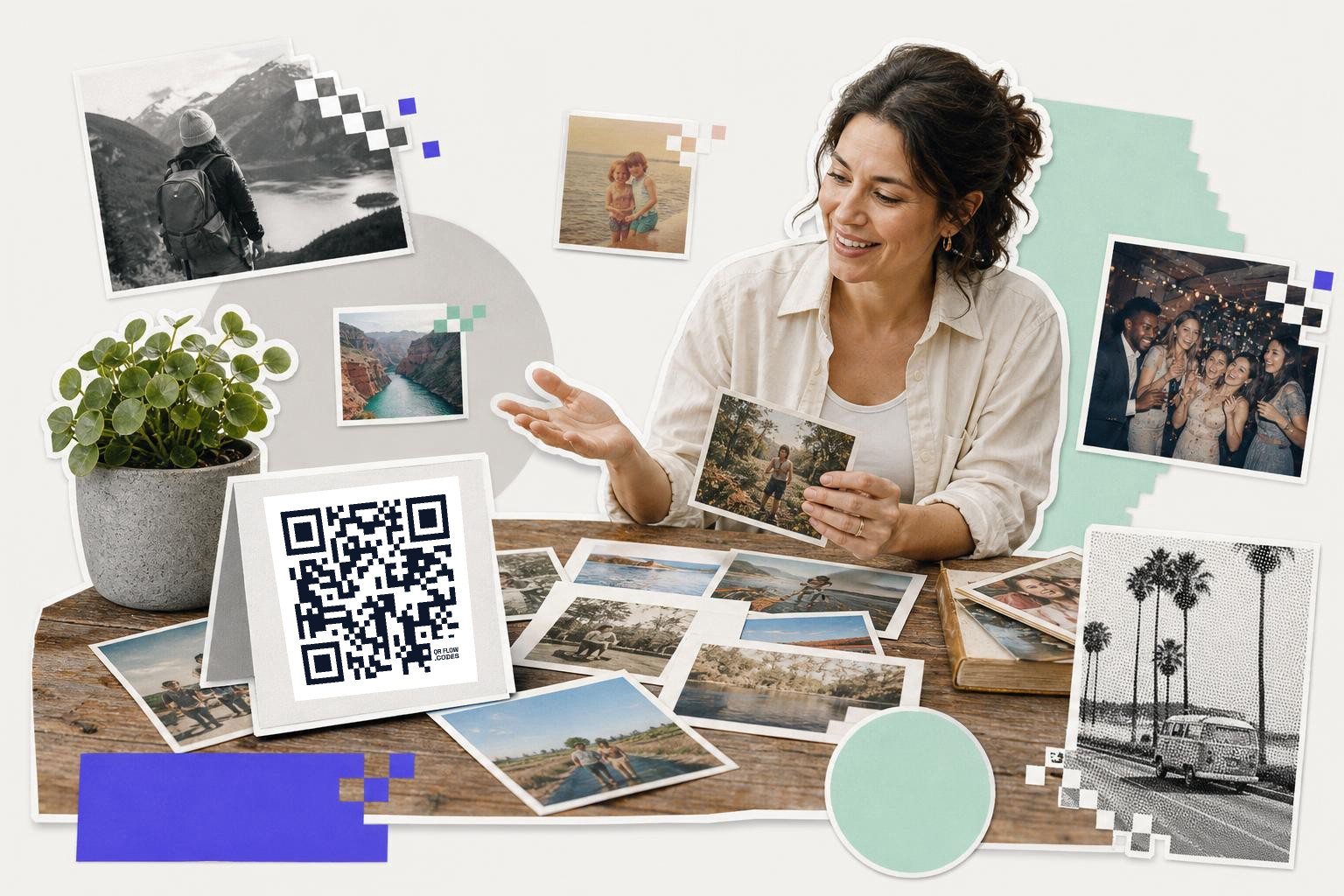
Copy the album's share link, paste it into a generator, and download the image. A plain static code locks to that link forever, while a dynamic code lets you change the destination later, so choose dynamic if there is any chance the album moves.
- Open your album or folder and copy its share link.
- Paste the link into the generator.
- Choose dynamic if the album might move, static if the link is permanent.
- Give the code a short name so you can find it again later.
- Download the PNG for print, or the SVG if a designer is laying out the card.
- Scan it on 2 phones: yours, and one that is not signed in to your account.
That last step is the one people skip, and it catches the most common failure by far. A link that opens fine for you can still ask a stranger to sign in, and you will never see that on your own phone, because you are already signed in. Borrow a phone, or ask a friend across the room. Codes themselves do not stop working, though the link behind one can, and we went through what actually breaks a code separately.
Where to print it, by occasion#
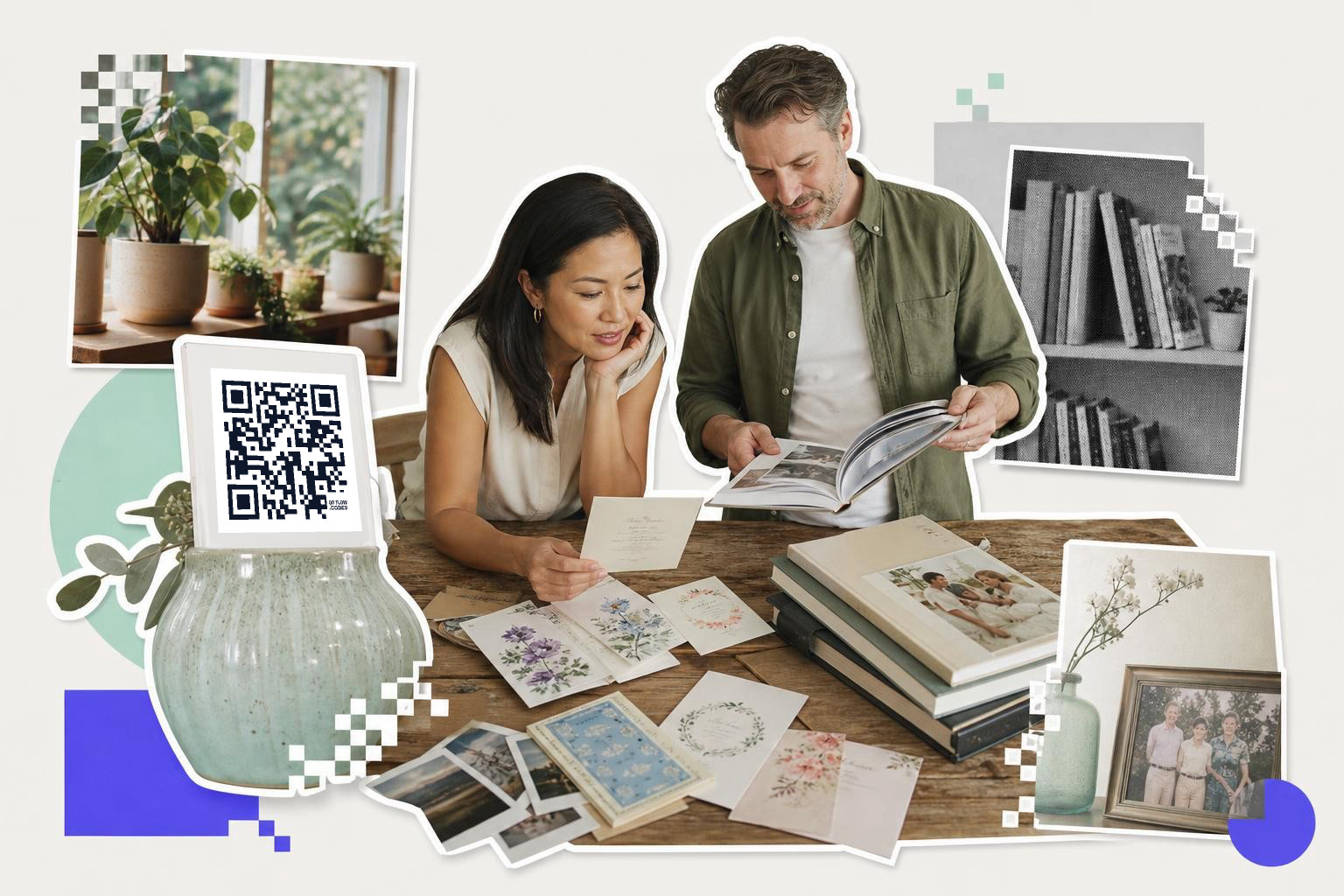
Occasions decide the wording and the placement more than the technology does. These are the ones people set up most:
- Birthday or house party. A card on the snack table pointing at a shared album guests can add to.
- Baby shower. The same card on the table, plus a second code on the thank-you note that opens the finished album.
- Quinceañera or graduation. A code on the back of the photo favor, opening the full gallery instead of the one printed shot.
- Family reunion. One code on the name tags, so 40 people fill the same album instead of eight.
- Memorial table. A small framed code beside the photo board, opening a longer album of the same person. A code on the headstone does that job permanently.
- Art and prints. A code on the back of a framed piece, opening the shots from the day you made it.
- Weddings. Table cards, the invitation and the thank-you note all want different links, so we put the whole setup on the wedding photo QR code page.
- A bigger event. Check-in, a schedule and a photo album at once is a different job, and the event QR code page covers it.
Questions people ask about photo QR codes#
Do people need an app to see the pictures?#
No. The album link opens in whatever browser the phone already has, and the camera app reads the code with no download. The only thing that trips guests up is a sharing setting that asks them to sign in, so test your link on a phone that is not yours.
Can guests add their own photos?#
Yes, if you share an album rather than a link to a finished folder. In Google Photos, anyone with access to a shared album can add pictures to it. Set that up before you print anything, so the code you hand out already points at an album people can fill.
Is a QR code for pictures free?#
Yes, making the code costs nothing and every album option above is free to set up. One dynamic code is free as well, which is all a single party or family album needs. You only pay once you want several dynamic codes or your own short link domain.
What if I move the album later?#
Point the same code at the new link. A dynamic code keeps the printed picture and swaps the destination, so a card already sitting on a table keeps working. A static code cannot be repointed, which is why it suits a link that will never move.
Pick where the photos live first, then make the code. Once the album has a link, QRFLOW.codes turns it into a code you can print in under 2 minutes, and a dynamic one lets you change where it points later without reprinting a thing.