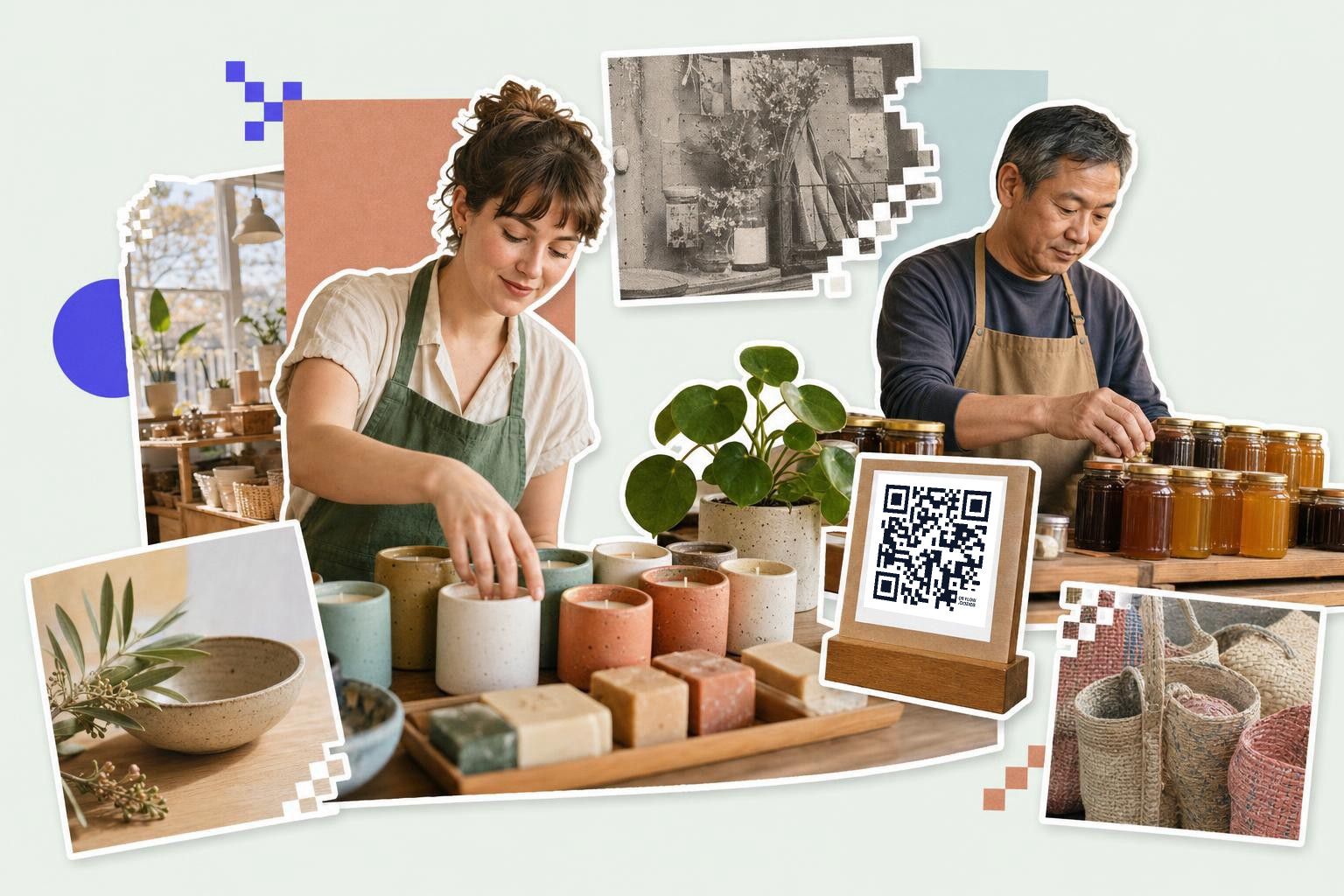
QR code social media marketing works best when each code has one job, like follow, tag, review, or watch, and most counter or packaging codes should be at least 1 inch (2.5 cm) wide.
Small businesses usually miss the same thing here. The code is easy to make, but the hard part is choosing the social action behind it.
A code that opens your homepage, then your bio link, then asks people to hunt around rarely gets scanned twice. A code that opens one short video, one giveaway post, one tagged-photo prompt, or one review page has a much better shot.
If you need the basics of styling or color, our guide to a custom QR code generator covers what changes are safe.
Where should you put social QR codes on packaging?#
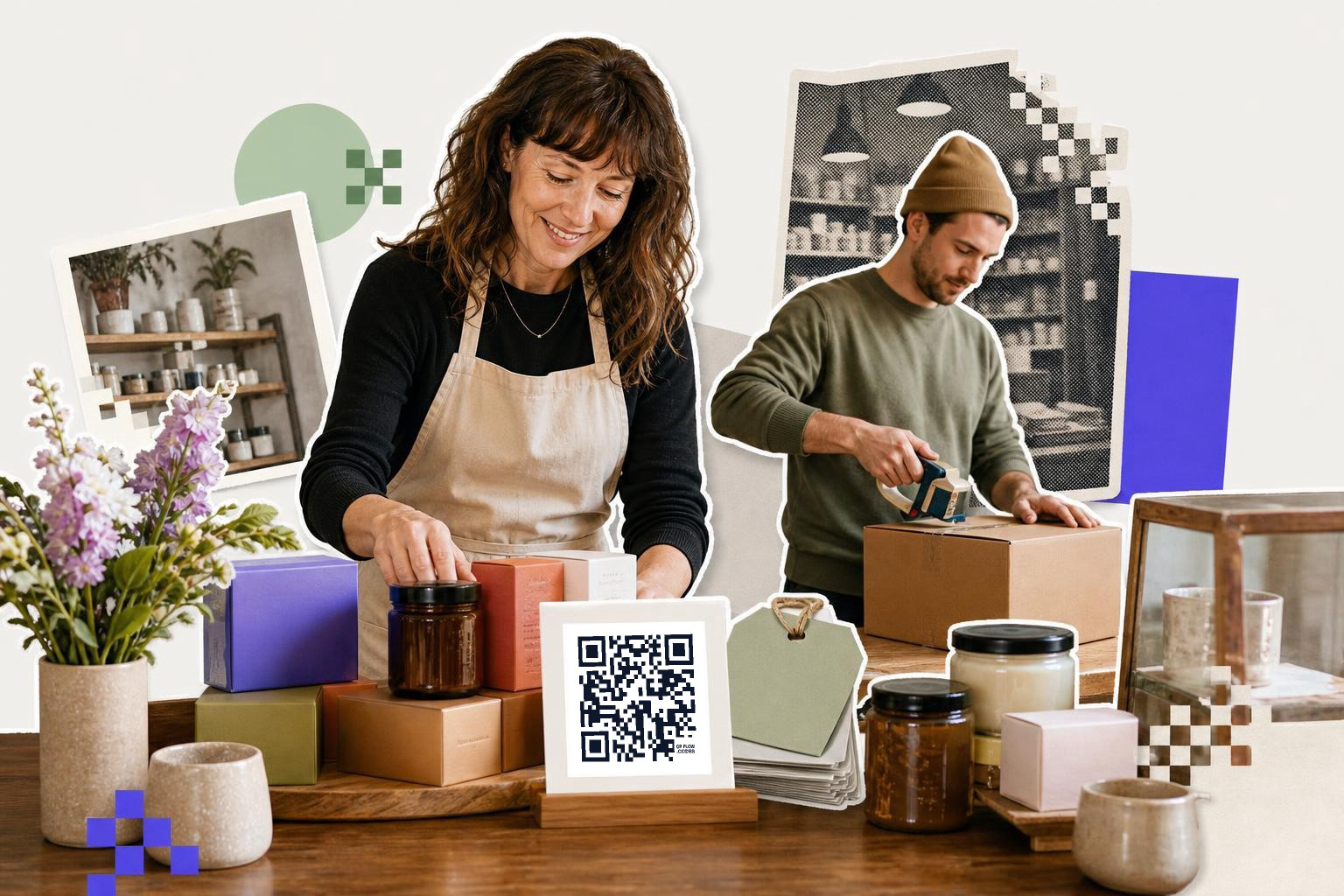
Packaging is best for slow-burn social growth. Put the code on a box insert, thank-you card, or product tag, and link it to one action people can do after unboxing.
For most small shops, that action is not “visit our Instagram.” It is “post your setup and tag us,” “watch the 20-second how-to,” or “see three ways to use this.” A candle shop, bakery, or handmade brand gets more from a code that opens a specific post or a simple link page than a bare profile.
Print the code where hands naturally pause, not where tape covers it. A 1 inch (2.5 cm) square works on an insert card, while a shipping box top usually needs closer to 1.25 inches (3.2 cm) because the surface is busier.
Packaging is also where dynamic helps. If your seasonal campaign changes after 500 boxes are packed, an editable code lets you switch the destination without wasting the printed cards. If you want to make and swap those codes fast, the free QR code generator is the easiest place to start.
What should a table or counter code open?#
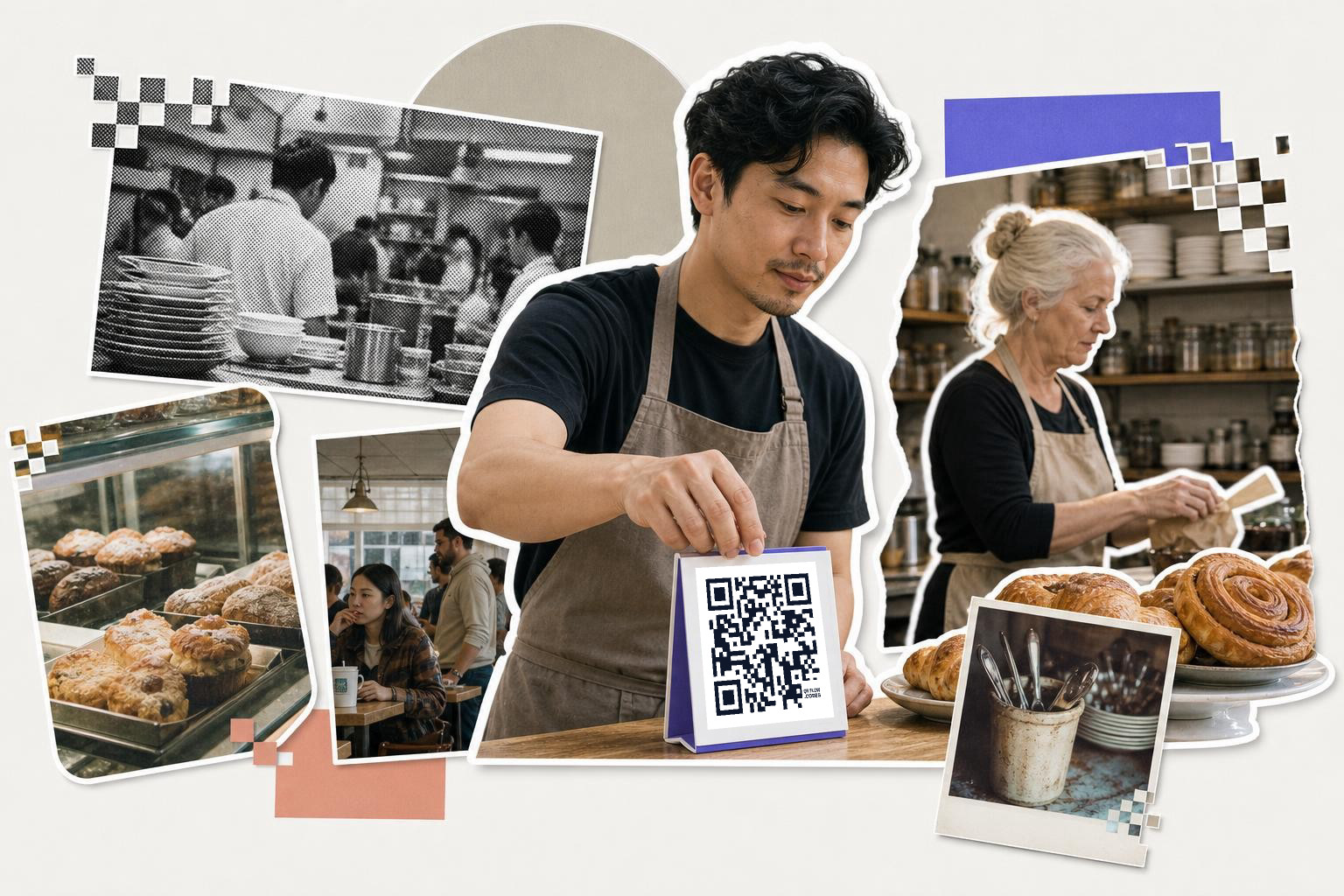
A table or counter code should open something people can enjoy in under 30 seconds. Good picks are a giveaway post, a short behind-the-scenes reel, a menu video, or a review prompt.
People standing at a register do not want choices. If you run a coffee shop, bakery, or takeout spot, send them to one clear destination that matches the wait. “Scan to see this week’s drinks” beats “follow us on social” almost every time.
Placement matters more than decoration. Keep the code on a small tent card or beside the register, not flat under glare. A code people scan from 1 to 3 feet (0.3 to 0.9 m) away should usually be at least 1.2 inches (3 cm) wide.
A review ask can sit beside a social ask, but do not force both through one code. If reviews are the main goal, use a dedicated Google review QR code and let the social code do its own job.
How do salons and service businesses use QR code social media marketing?#
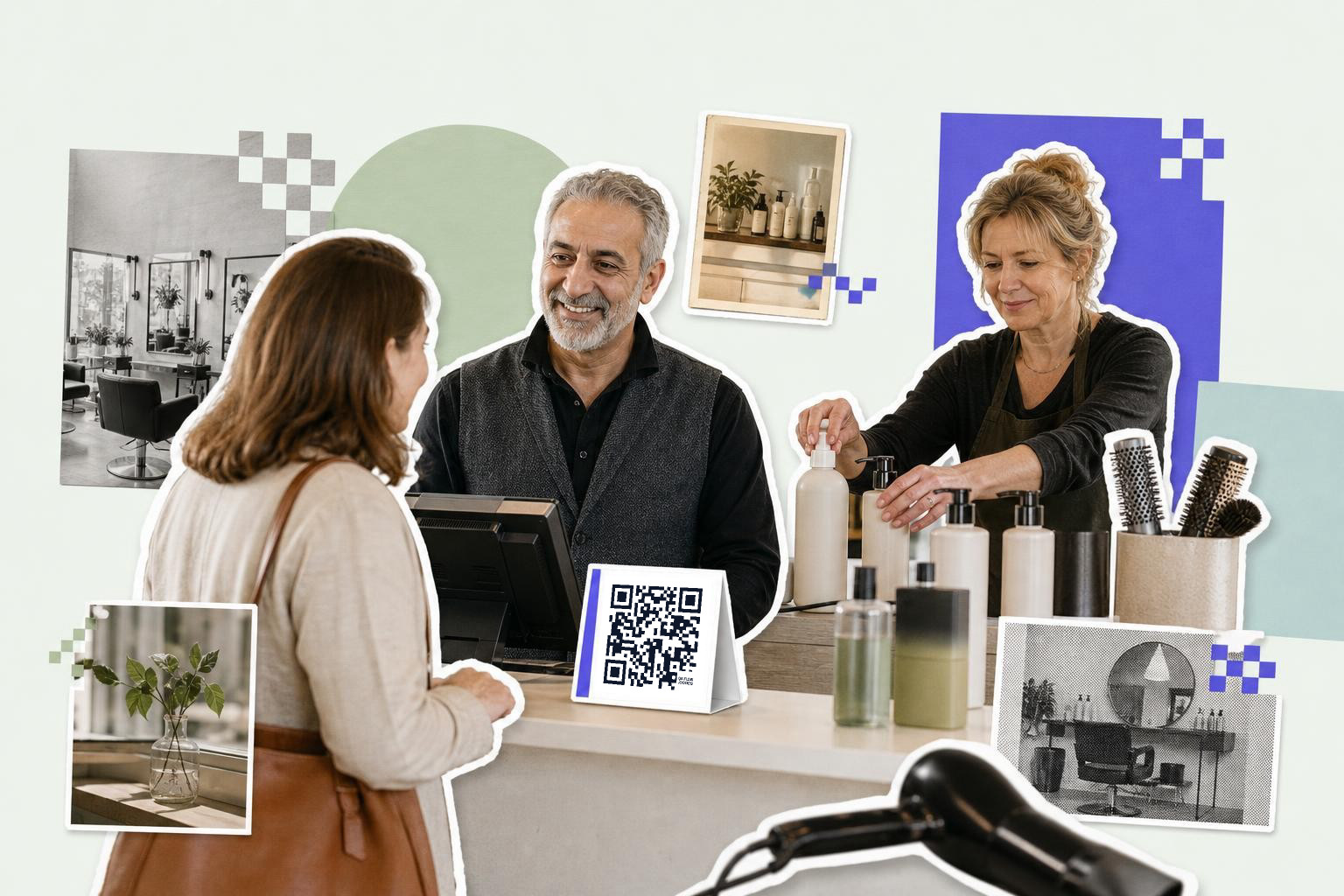
Salons, studios, and service desks do best with codes that prove the result. Send clients to before-and-after posts, care tips, booking reminders, or a reel that shows the service in real life.
This works because the waiting area creates a natural scroll moment. Someone with ten spare minutes is much more likely to watch a 15-second clip, save a hair care post, or follow for appointment openings than someone walking past your window.
The beginner mistake is linking to a profile with years of mixed content. Instead, point the code to a fresh post, a highlights-style link page, or one campaign. If you run promos often, make that code editable so the front-desk sign stays useful after the offer changes.
For beauty businesses, the strongest social code is often not at the door. It is at the mirror, the checkout desk, or the aftercare shelf, where the result is right in front of the client. We have more location-specific examples in QR codes for salon promotions in real client touchpoints.
A useful middle ground is one reusable desk code for current social content, plus one static review code that never changes.
How do receipt stuffers and bag inserts earn tags?#
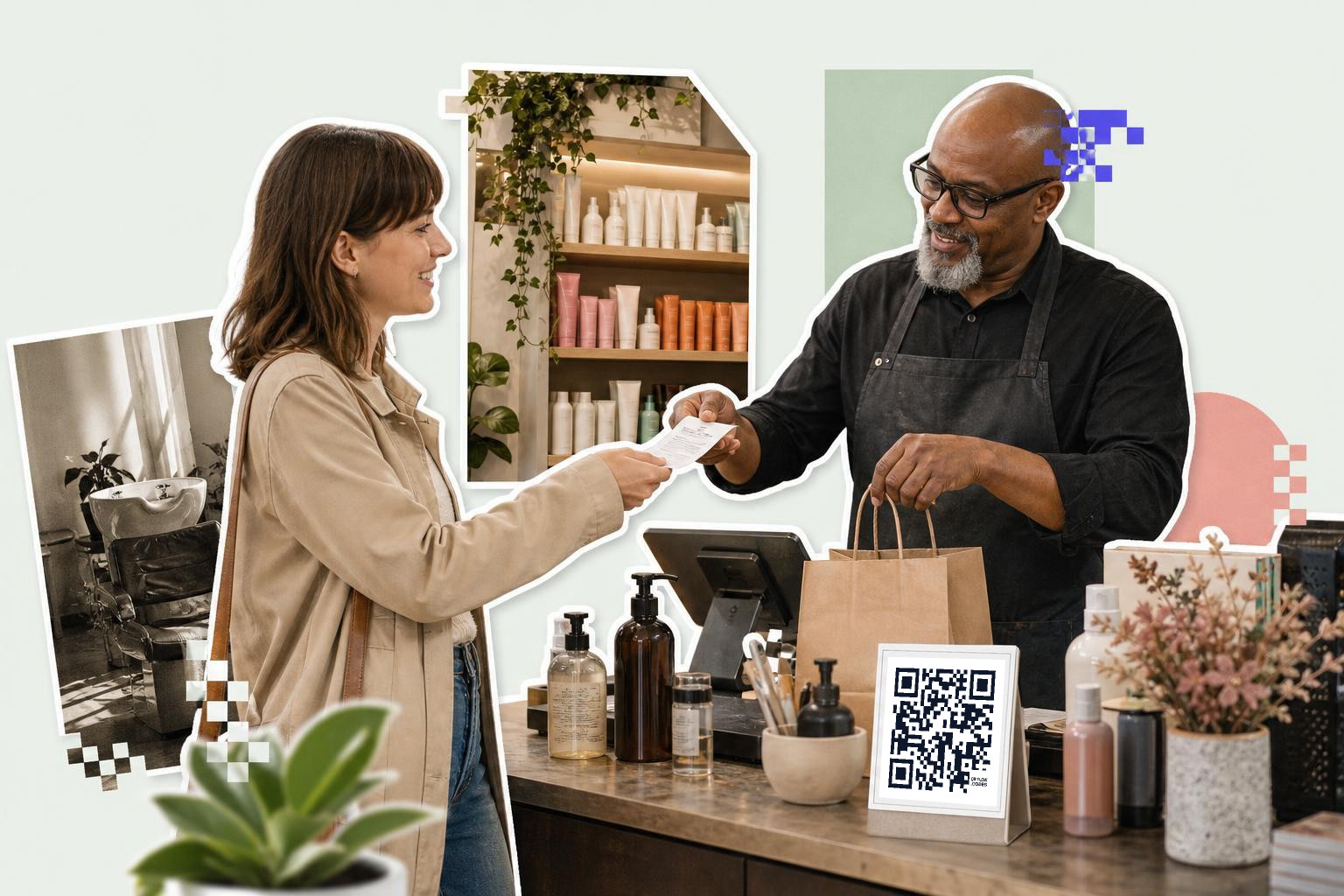
Receipt and bag inserts work when the request is small. Ask for one photo, one tag, one follow, or one vote, not a full campaign.
A small retailer can print “Show us where this ended up” on a bag insert and direct the code to a pinned post with the prompt. A food business can use “Tag your first bite” and direct the code to the exact platform where customers already post. A service shop can direct people to a post about referral perks.
The practical detail people often miss is timing. A receipt code gets scanned later, often at home, so the destination should still make sense out of context. Avoid sending people to a story that vanishes. Use a profile, a reel, a pinned post, or a link page you control.
If your social push changes month to month, QRFLOW.codes lets you keep one dynamic code live and change where it points after printing. More than that, and the plans and pricing page shows when upgrading starts to make sense.
Do pop-up markets, fairs, and booths need a different code?#
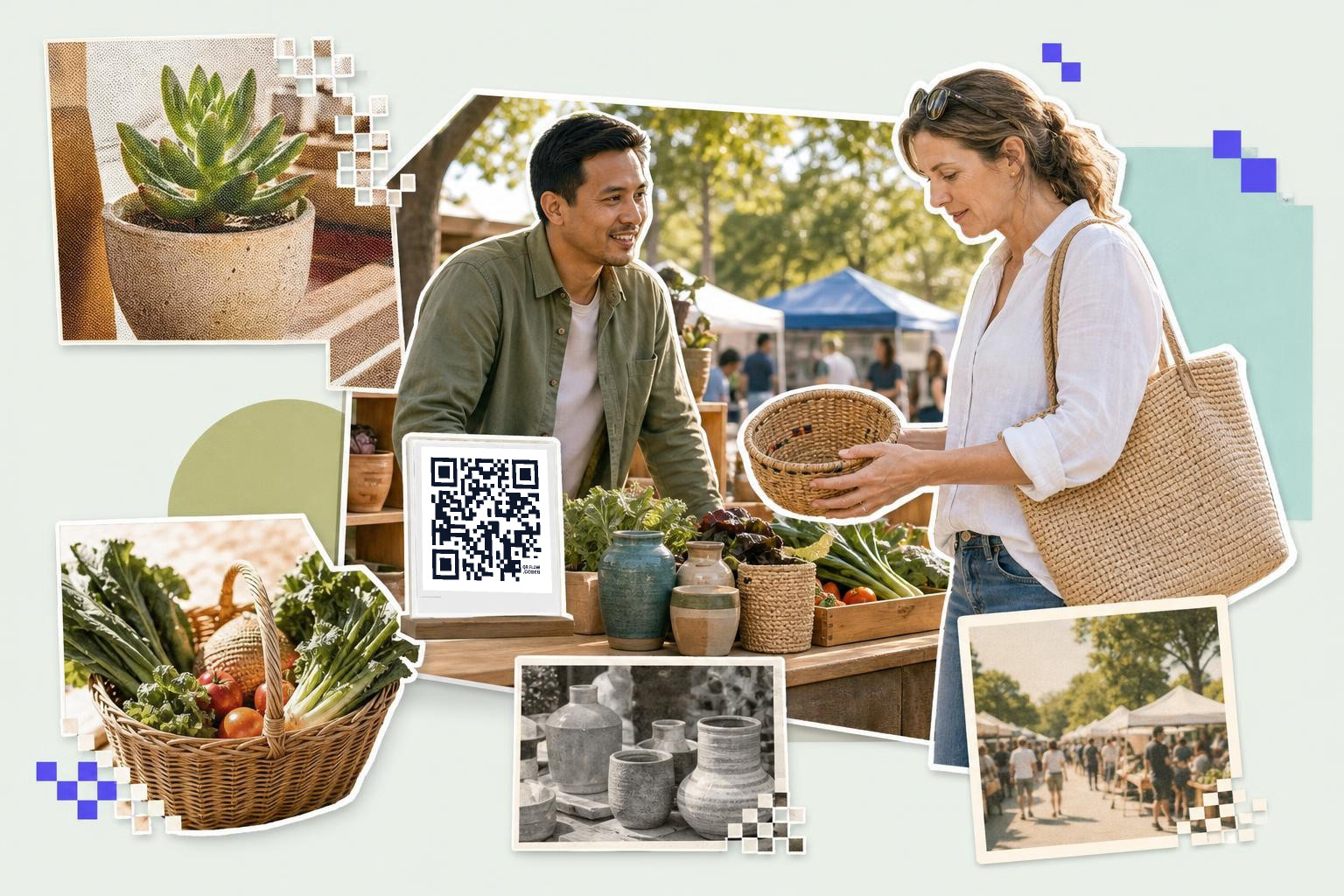
Pop-up and booth QR codes should capture the moment before people walk away. The best destination is usually a giveaway post, an event-only offer, or a profile that tells them what to do next.
This is different from packaging because attention is short and the setting is noisy. If you sell at markets, craft fairs, or community events, put one code on the table for social follows and one separate code for payments or ordering. Mixing both jobs into one code usually weakens both.
Booth signs are often scanned from farther back. For a sign seen from 3 to 6 feet (1 to 2 m), start around 2 inches (5 cm) wide. Put the code near the item people are already picking up, not at knee height on the tablecloth.
If you also use event materials, our QR code for events page shows where different event codes fit without crowding the setup.
Can thank-you cards grow your next post?#
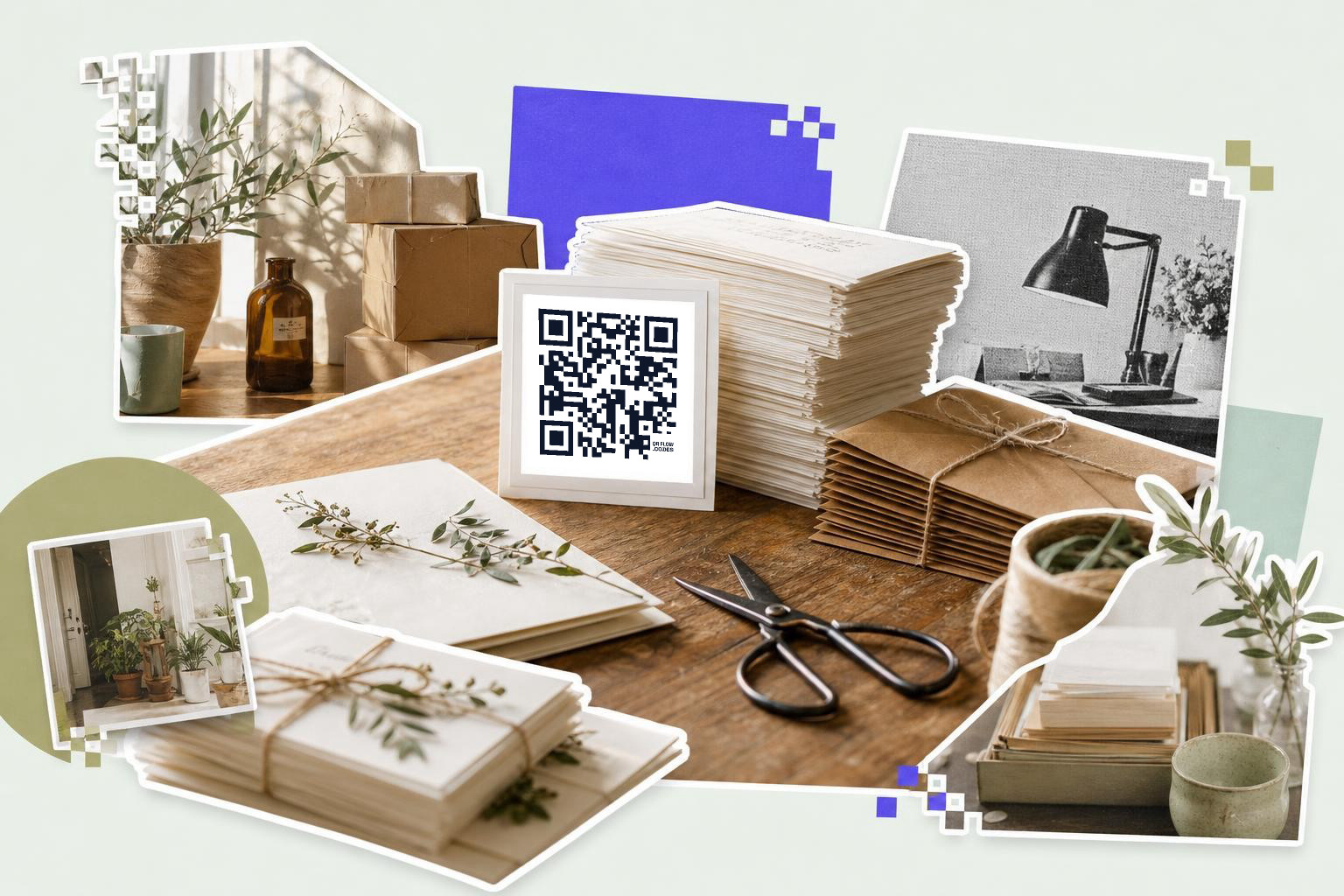
Thank-you cards are great for customer-made content. Link the code to a post that asks for a photo, a reorder reminder, a giveaway entry, or a simple “follow for the next drop.”
This works well for makers, boutiques, and online shops because the customer is already in a good mood. A 3 inch by 5 inch (7.6 by 12.7 cm) card has room for one short line of copy and a code around 1 inch (2.5 cm) wide without feeling cramped.
Keep the words specific. “Scan to share your setup” is stronger than “connect with us.” If the card goes in every order, treat it like part of the product, not filler.
If you want one code to send people to several networks, a simple landing page is better than choosing three tiny icons around one square. The code still has one destination, but the customer gets a clean choice after the scan.
Questions people ask about QR code social media marketing#
Social QR: profile or post?#
A single post usually wins when you want action fast. A profile makes sense when your feed is tight and current, but most small businesses get more scans to stick when the code opens one clear thing.
Can I use one QR code for Instagram, TikTok, and Facebook?#
Yes, but only if the code opens a simple landing page with those choices. Sending one code to three platforms directly is not possible, so you need one page in the middle that lists them cleanly.
Do I need a dynamic code for social marketing?#
No, not always. Use a static code if the destination will stay the same for months, like a main profile. Use a dynamic code if the campaign, post, or offer behind it will change after the card, sign, or insert is printed.
Best platform for QR code link?#
The best platform is the one your customers already use in that moment. Restaurants often do well with short video or review prompts, while product brands often do better with photo tags, unboxing posts, or creator-style clips.
A printed social code should feel like a shortcut, not homework. Pick one action, match it to the place, and keep the destination current.
If you want to make one for a counter card, insert, or booth sign, start with QRFLOW.codes and point the code to the post or page you actually want people to open.