
What does QR code stand for? QR means Quick Response, and the code works by storing data in a square grid that a phone camera can read in a second or two.
The short version is simple. A QR code was named for fast reading, first in factories, and now you see it on menus, posters, boxes, and forms. The QR code meaning is about speed, but the shape matters too, because that square grid can hold far more data than a standard barcode.
What does QR code stand for?#

QR code stands for Quick Response code. The name came from the goal: make a code that scanners could read quickly from any angle, even on a moving production line.
That happened in Japan in the 1990s. The code was created by Denso Wave, a company working on automotive tracking. Factory parts needed more information than old one-dimensional barcodes could carry, and workers needed scans to happen fast.
A standard barcode stores data in lines across one direction. A QR code stores data both across and down, inside a square made of tiny modules. That simple change gave it more room for numbers, letters, and symbols.
How does a QR code work?#
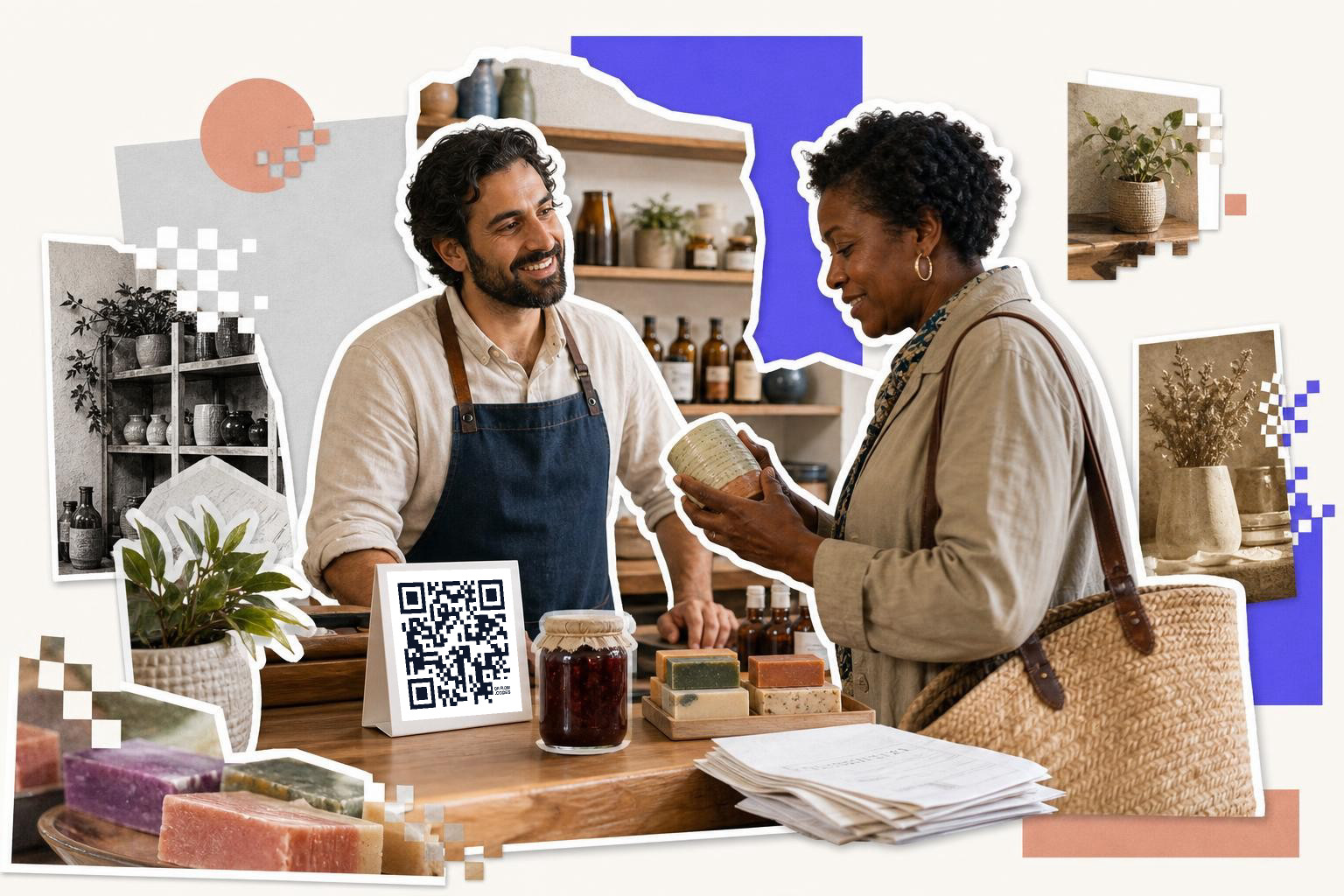
A QR code works by turning data into black and white squares, then using three large corner markers to help a scanner find and read the pattern. If part of the code is dirty or covered, error correction can still save the scan.
Those three big squares are the easiest part to spot. They tell the camera where the code is and how it is rotated. That is why a phone can usually read the code upside down or tilted.
Inside the rest of the grid, each small square holds part of the data. The data might be a web link, contact card, Wi-Fi login, or plain text. Most people use QR code technology for links, because one scan opens the page right away.
Error correction is a big reason QR codes work so well in real life. A code can still scan if a corner is smudged, a label is scratched, or a cup sleeve bends a little. That is also why some branded codes still work, as long as the logo does not cover too much of the pattern.
If you are making one for a webpage, free QR code generator tools are enough for a basic static code. If you might change the destination after printing, a dynamic code makes more sense. On QRFLOW.codes, static codes and PNG downloads are free with no sign up, while editable dynamic codes are part of Premium pricing.
How is a QR code different from a barcode?#

A QR code can hold more data in less space than a barcode, and it scans from more angles. A barcode is still fine for simple product IDs, but it is not built for camera-based link sharing.
The key difference is direction. A barcode is one dimensional, so the scanner reads left to right. A QR code is two dimensional, so it stores data across the full square.
That lets QR codes hold a lot more information. Exact capacity depends on the data type and error correction level, but in plain terms, a QR code can store much more than the few digits you see under a retail barcode. That is why barcodes have stayed strong in checkout lanes, while QR codes spread into posters, packaging, receipts, tickets, and classroom handouts.
Another difference is how people scan them. Barcodes usually need a laser scanner or a checkout device. QR codes were a better fit for phone cameras, especially once smartphone camera apps started scanning them without a separate app.
When did QR codes go from factories to everyday life?#

QR codes moved into everyday use once smartphones made scanning easy. The big shift came when phone cameras and camera apps could open links directly, without extra hardware.
Before that, the QR code definition felt technical and niche. You might see one in shipping, parts tracking, or warehouse labels, but not much else. Once phones got better cameras and built-in scanning, the same square code suddenly made sense on a cafe table, a train ticket, or a flyer in a shop window.
That change also matched how people use the web now. A printed page can send you to a menu, signup form, payment page, app download, or map pin in one scan. A flyer becomes a link. A label becomes instructions. Tiny portal, real job.
If you want ideas for asking an assistant to make the right kind of code, these QR code prompts are a good starting point. If you just need a code that opens a site or file, QRFLOW.codes lets you make and download a static one without a signup wall.
Does every QR code do the same thing?#
No. The pattern looks similar, but what happens after the scan depends on the data inside the code.
One code might open a website. Another might save contact info, join Wi-Fi, draft a text message, or open a map location. That is why the QR code meaning is not tied to one use. It is a format, not a single app.
The same rule explains why some codes can be changed later and others cannot. A static code points straight to the final data and stays that way forever. A dynamic code points to a short redirect, so you can change the destination after printing, which is handy for menus, event pages, and files that move.
QR stands for Quick Response. That name still fits, because the whole point is fast access from a printed square to something useful on your phone.
QR codes in marketing and advertising#
QR codes have become a staple in marketing and advertising, offering a bridge between physical and digital worlds. They allow businesses to engage customers in new ways, providing instant access to promotional content. For example, a QR code on a poster can lead to a video ad, an online store, or a special discount page. This makes it easy for potential customers to interact with a brand without needing to type in a web address.
Marketers use QR codes to track engagement and gather data on customer interactions. By analyzing scan data, businesses can learn which campaigns are most effective and adjust their strategies accordingly. This data-driven approach helps optimize marketing efforts and improve return on investment. Instead of reprinting flyers or posters, businesses can change the destination of a dynamic QR code, keeping their campaigns fresh and relevant.
QR codes in education and learning#
In educational settings, QR codes provide a dynamic tool for teachers and students. They can link to resources, assignments, or multimedia content, enhancing the learning experience. For instance, a teacher might include a QR code in a textbook that leads to an interactive quiz or a video explanation of a complex topic.
QR codes can also facilitate classroom management. Teachers can use them to quickly share links to class materials or collect student responses. They can be placed on classroom walls, directing students to additional resources or instructions.
For students, QR codes offer a convenient way to access information on the go. They can scan codes to download study materials or participate in interactive activities. This flexibility supports diverse learning styles and encourages independent exploration.
Security and privacy concerns with QR codes#
While QR codes offer convenience, they also pose security and privacy risks. Scanning a code can lead to malicious websites or download harmful software. Avoid scanning QR codes from unknown sources to protect your data.
To mitigate risks, users should ensure their devices have updated security software. Some QR code readers include safety features that warn users about suspicious links before opening them. Businesses should also adopt secure practices, such as using HTTPS links and providing clear information about where a QR code will lead.
Privacy is another concern, as QR codes can be used to track user behavior. When scanning a code, users may unknowingly share personal information. To protect privacy, individuals should be aware of what data is being collected and how it will be used. Businesses should be transparent about their data collection practices and comply with privacy regulations.
Make your own with QRFLOW.codes, or compare editable options on Premium pricing if you need to change the link after print.
Questions people ask about what QR code stands for#
Why are QR codes called Quick Response codes?#
QR codes are called Quick Response codes because they were designed to be read quickly by scanners. They can store complex data like URLs and contact information, making them versatile for various uses.
How much data can a QR code hold?#
A QR code can hold significantly more data than a traditional barcode. Depending on the error correction level, it can store up to 7,089 numeric characters or 4,296 alphanumeric characters. This capacity allows QR codes to store complex data like URLs, contact information, and more.
Can QR codes be used for payments?#
Yes, QR codes are widely used for payments. They provide a quick and secure way to transfer payment information. Many payment apps and services use QR codes to facilitate transactions, allowing users to pay by scanning a code with their smartphone.
Are QR codes safe to use?#
Yes, QR codes are generally safe to use if you scan them from trusted sources. They can open links or download files, which might lead to malicious content if misused. Always verify the source before scanning to avoid security risks.
When the sign, card, or label is ready to print, make the code on the generator and download it as SVG or PNG at the size the piece needs.